
.wt-def-page{–blue:#005baa;–blue-dark:#0c3f78;–red:#d42027;–ink:#102033;–text:#334155;–muted:#64748b;–line:#dbe3ec;–soft:#f3f7fb;–soft2:#eef5fb;–white:#fff;color:var(–text);font-family:Inter,Arial,sans-serif;font-size:16px;line-height:1.68}
.wt-def-page *{box-sizing:border-box}.wt-def-page a{color:var(–blue);text-decoration:none}.wt-def-page a:hover{text-decoration:underline}.wt-def-wrap{width:min(1160px,calc(100% – 40px));margin:0 auto}.wt-def-page h1,.wt-def-page h2,.wt-def-page h3{color:var(–ink);letter-spacing:0}.wt-def-page h1{margin:0 0 14px;font-size:clamp(36px,4.5vw,58px);line-height:1.08}.wt-def-page h2{margin:0 0 14px;font-size:clamp(25px,3vw,36px);line-height:1.18}.wt-def-page h3{margin:0 0 8px;font-size:20px;line-height:1.28}.wt-def-nav{border-bottom:1px solid var(–line);background:#fff}.wt-def-nav__inner{display:flex;align-items:center;justify-content:space-between;gap:24px;min-height:72px}.wt-def-logo img{display:block;width:auto;height:42px}.wt-def-menu{display:flex;flex-wrap:wrap;justify-content:flex-end;gap:4px}.wt-def-menu a{padding:10px 12px;color:#30445c;font-size:14px;font-weight:700}.wt-def-breadcrumb{padding:20px 0 8px;color:var(–muted);font-size:14px}.wt-def-hero{display:grid;grid-template-columns:minmax(0,1.05fr) minmax(320px,.95fr);gap:38px;align-items:center;padding:42px 0 46px}.wt-def-kicker{margin:0 0 10px;color:var(–red);font-size:12px;font-weight:800;text-transform:uppercase}.wt-def-subtitle{margin:0 0 18px;color:#475569;font-size:20px;font-weight:700}.wt-def-lede{margin:0 0 22px;color:#344356;font-size:18px}.wt-def-actions{display:flex;flex-wrap:wrap;gap:12px}.wt-def-btn{display:inline-flex;align-items:center;justify-content:center;min-height:44px;border:1px solid var(–blue);border-radius:6px;padding:11px 18px;font-weight:800}.wt-def-btn–primary{background:var(–blue);color:#fff!important}.wt-def-btn–secondary{background:#fff;color:var(–blue)!important}.wt-def-quick{border:1px solid #bed4ea;border-radius:8px;background:var(–soft2);padding:24px}.wt-def-quick ul{margin:12px 0 0;padding-left:20px}.wt-def-section{padding:38px 0;border-top:1px solid var(–line)}.wt-def-grid{display:grid;grid-template-columns:repeat(2,minmax(0,1fr));gap:18px}.wt-def-grid–3{grid-template-columns:repeat(3,minmax(0,1fr))}.wt-def-card{border:1px solid var(–line);border-radius:8px;background:#fff;padding:20px}.wt-def-card p{margin:0;color:var(–muted)}.wt-def-note{border-left:4px solid var(–blue);background:var(–soft);padding:16px 18px}.wt-def-table-wrap{overflow:auto;border:1px solid var(–line);border-radius:8px;background:#fff}.wt-def-table{width:100%;min-width:760px;border-collapse:collapse}.wt-def-table th,.wt-def-table td{border-bottom:1px solid var(–line);padding:13px 14px;text-align:left;vertical-align:top}.wt-def-table th{background:#f1f5f9;color:var(–ink)}.wt-def-figure{margin:0;border:1px solid var(–line);border-radius:8px;background:#fff;overflow:hidden}.wt-def-figure img{display:block;width:100%;height:auto}.wt-def-figure figcaption{padding:10px 14px;color:var(–muted);font-size:13px}.wt-def-figure–hero{margin-top:16px}.wt-def-figure–parts{max-width:560px;margin:22px auto 0}.wt-def-media-grid{display:grid;grid-template-columns:repeat(2,minmax(0,1fr));gap:18px;margin-top:20px}.wt-def-media-grid–4{grid-template-columns:repeat(4,minmax(0,1fr))}.wt-def-media-grid–4 .wt-def-figure img{aspect-ratio:4/3;object-fit:cover}.wt-def-list{margin:0;padding-left:20px}.wt-def-list li+li{margin-top:8px}.wt-def-cta{display:flex;align-items:center;justify-content:space-between;gap:22px;border:1px solid #b9cce3;border-radius:8px;background:var(–soft2);padding:26px}.wt-def-faq details{border:1px solid var(–line);border-radius:8px;background:#fff;padding:16px 18px}.wt-def-faq details+details{margin-top:10px}.wt-def-faq summary{cursor:pointer;color:var(–ink);font-weight:800}.wt-def-mini-links{display:flex;flex-wrap:wrap;gap:10px;margin-top:16px}.wt-def-mini-links a{border:1px solid var(–line);border-radius:6px;padding:8px 10px;background:#fff;font-weight:700;font-size:14px}@media (max-width:900px){.wt-def-nav__inner{align-items:flex-start;flex-direction:column;padding:12px 0}.wt-def-menu{justify-content:flex-start}.wt-def-hero,.wt-def-grid,.wt-def-grid–3,.wt-def-media-grid,.wt-def-media-grid–4{grid-template-columns:1fr}.wt-def-cta{align-items:flex-start;flex-direction:column}.wt-def-page h1{font-size:34px}}
Tubular motor definition
What Is a Tubular Motor?
Definition, Main Parts, Working Principle, Applications and Selection Basics
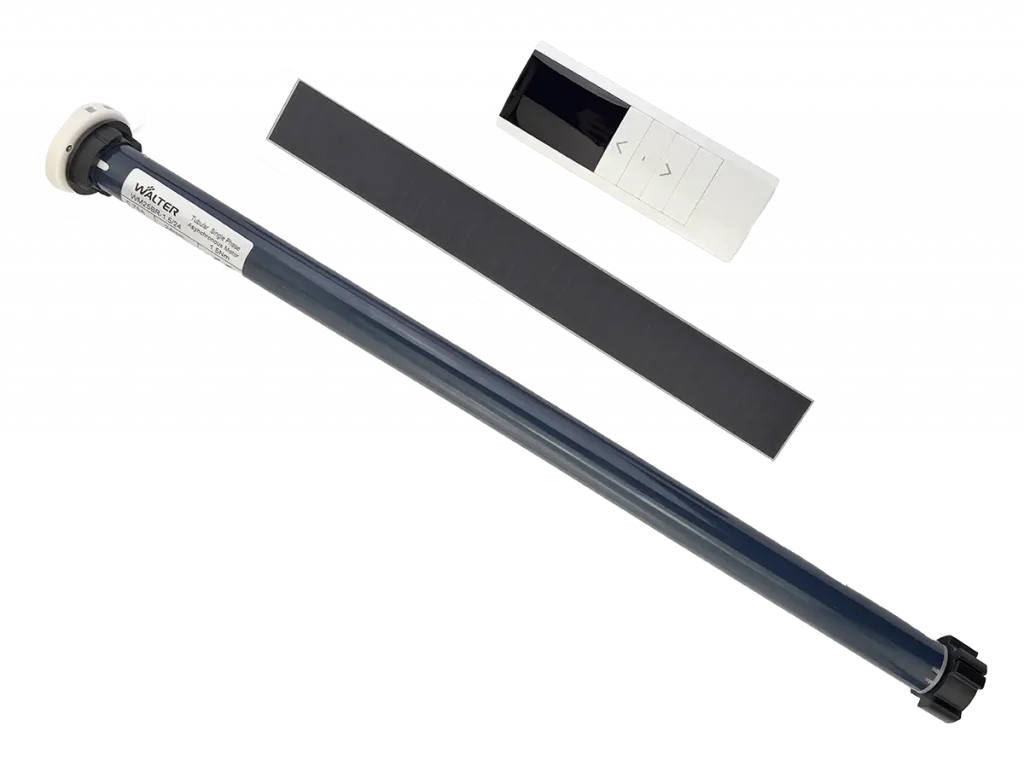
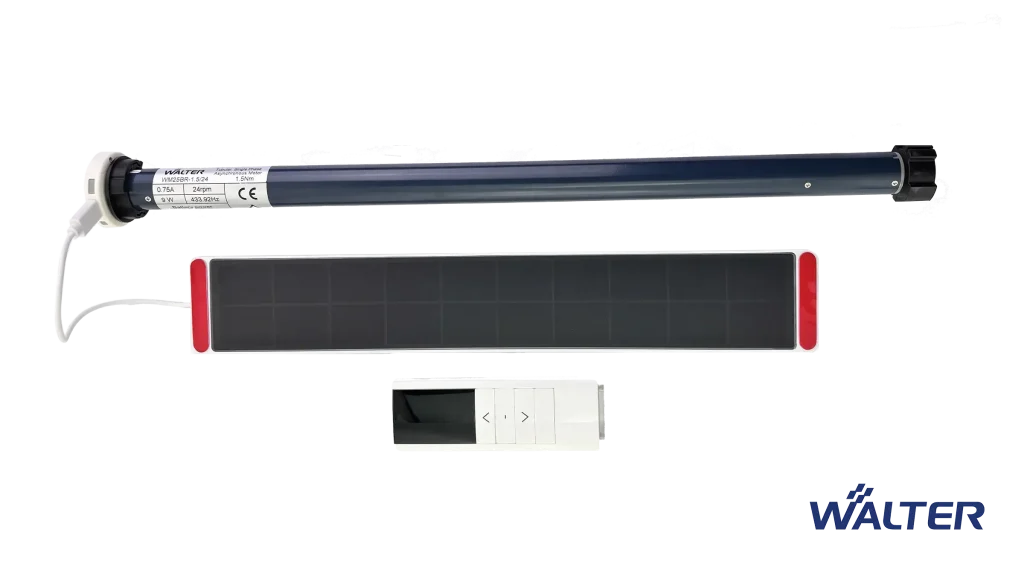
A tubular motor is a compact cylindrical electric drive installed inside a roller tube. It rotates the tube to open and close roller blinds, roller shutters, awnings, zip screens and other shading systems. Because the motor is hidden inside the tube, the system looks clean, saves space and is widely used in residential, commercial and industrial shading projects.
Where Is a Tubular Motor Installed?
A tubular motor is installed inside the roller tube. One end of the system connects with the bracket, while the output side works with a crown and drive wheel to rotate the tube. The fabric, shutter curtain or screen rolls around that tube, so the motor stays hidden during operation.
This hidden installation is the reason it is called a tubular motor. It keeps the drive system compact and makes the finished blind, shutter or screen look cleaner than an external motor arrangement.
How Does a Tubular Motor Work?
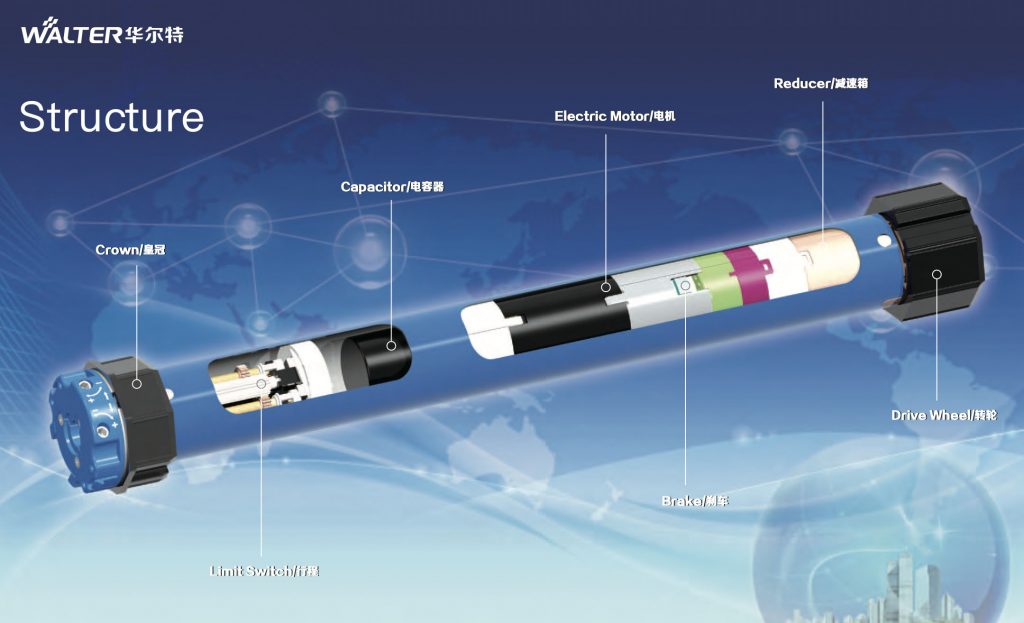
Power is supplied to the motor, the stator creates a rotating magnetic field and the rotor turns. The gearbox reduces speed and increases torque, then the output shaft rotates the roller tube. A limit switch stops the motor at preset upper and lower positions, while the brake system helps hold the curtain position after movement stops.
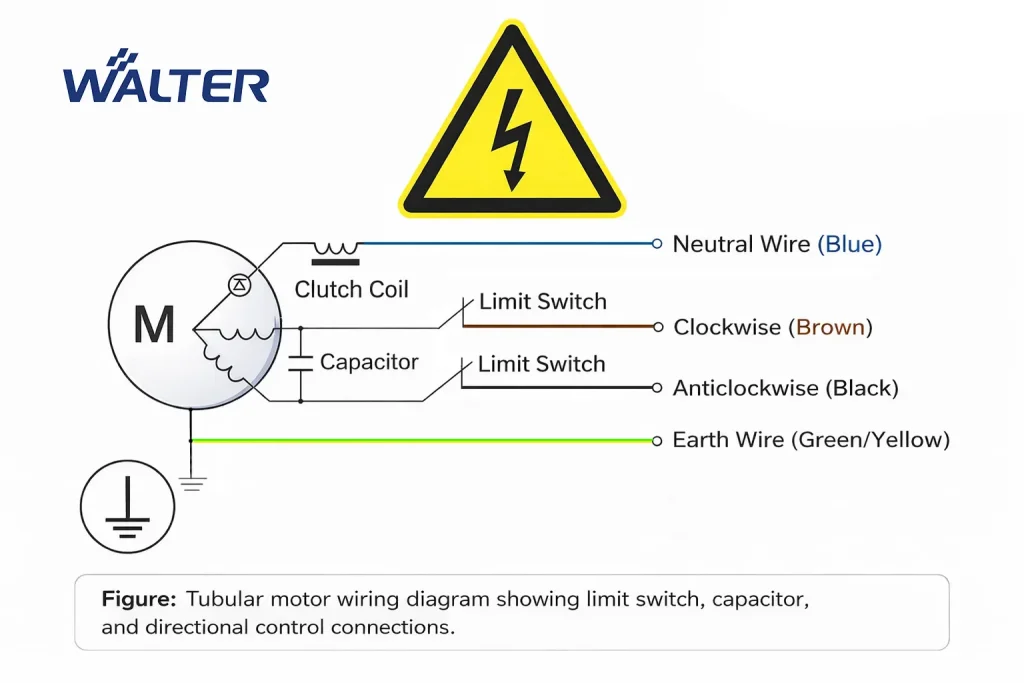
For a deeper working-principle explanation, see how does a tubular motor work.
Main Parts of a Tubular Motor
Stator
The fixed electromagnetic section that creates the magnetic field required to turn the rotor.
Rotor
The rotating section inside the motor that converts electromagnetic force into mechanical rotation.
Gearbox
The reduction system that lowers speed and increases usable torque for the roller tube.
Brake
The holding system that helps keep the curtain or shutter in position when the motor stops.
Limit switch
The position control system that stops travel at the preset upper and lower end points.
Output shaft
The driven end that transfers torque from the motor assembly to the tube accessories.
Crown
An accessory that helps the limit system read tube rotation and position.
Drive wheel
The adapter that locks motor output to the roller tube so the tube can rotate.
Bracket
The mounting support that holds the motor end in the shutter, blind or screen system.
Power cable or control wire
The electrical connection used for power supply, switch control or control signal input.
Receiver / electronic module
Used when the motor supports radio control, electronic limit setting or smart control functions.
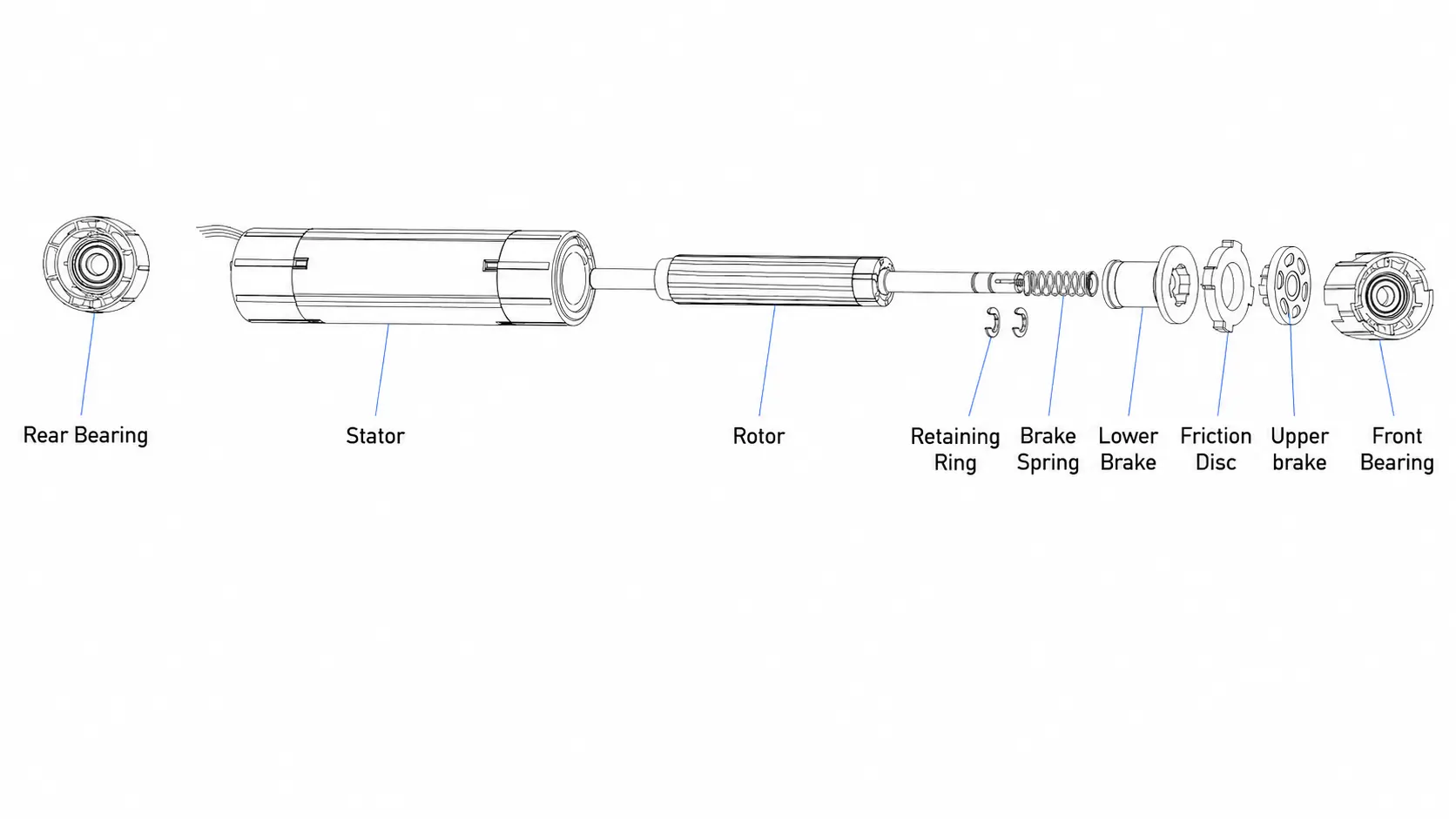
For a component-level breakdown, see what is inside a tubular motor.
Common Types of Tubular Motors
| Category | Types | Related Walter Pages |
|---|---|---|
| By power | AC tubular motor, DC tubular motor, battery tubular motor, solar rechargeable tubular motor | Tubular motors, Battery tubular motor |
| By control | Mechanical limit switch motor, electronic limit switch motor, built-in receiver motor, parallel control motor, smart home motor | Mechanical limit, Electronic limit, Built-in receiver, Parallel control, Smart home |
| By application | Roller shutter motor, roller blinds motor, awning motor, zip screen motor, Venetian blinds motor, projection screen motor | Roller shutter, Roller blinds, Awning, Zip screen, Venetian blinds |
Tubular Motor Type Comparison
| Motor type | Typical use | Selection note |
|---|---|---|
| AC tubular motor | Mains-powered shutters, blinds, awnings and larger tube systems. | Common choice where fixed wiring and stable power supply are available. |
| DC tubular motor | Low-voltage blinds, small shades and projects needing quieter control. | Check voltage, controller compatibility and required torque before selection. |
| Battery tubular motor | Retrofit roller blinds or locations where new wiring is difficult. | Confirm battery capacity, charging method and expected operating frequency. |
| Mechanical limit motor | Cost-sensitive standard blinds or shutters with manual limit adjustment. | Suitable when installers can set upper and lower limits mechanically. |
| Electronic limit motor | Projects needing easier limit setup or more precise position control. | Confirm setting method, controller compatibility and after-sales requirements. |
| Built-in receiver / smart motor | Remote-controlled or smart shading systems. | Check radio, gateway or smart home compatibility before order. |
Tubular Motor Applications
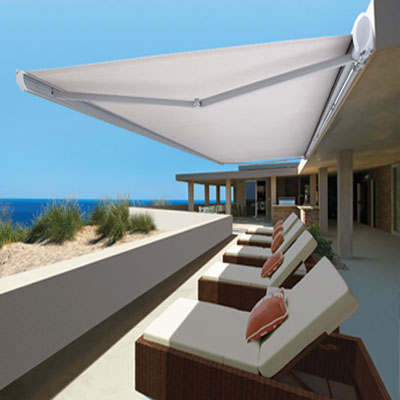
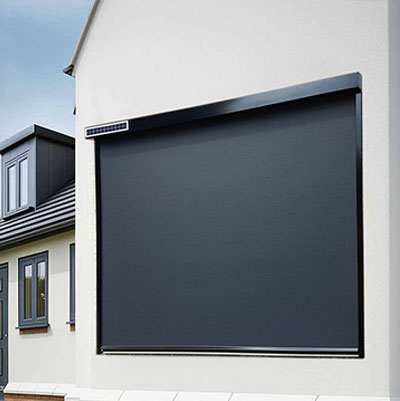
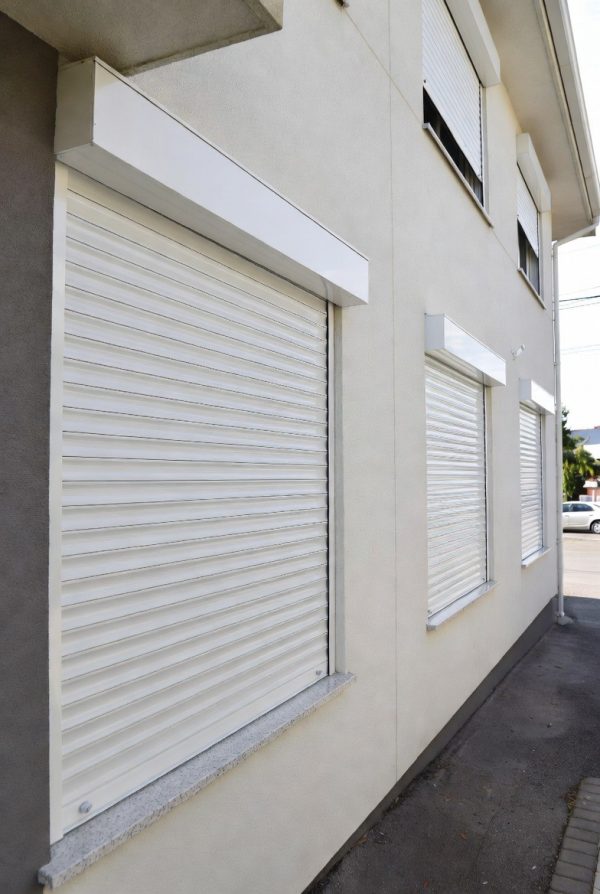
Tubular motors are used in roller shutters, roller blinds or roller shades, zip screens, awnings, Venetian blinds, projection screens and larger shading or door systems when the tube, load and duty conditions are suitable. Application choice matters because a shutter curtain, fabric shade and outdoor awning do not create the same load profile.

How to Choose the Right Tubular Motor
For buying or OEM selection, confirm tube diameter, curtain or shutter weight, required torque, speed, voltage, limit system, control method, noise requirement, duty cycle, certification requirement and OEM customization needs. Guessing only by appearance often leads to undersized torque, poor fit or unnecessary cost.
Tubular Motor Size vs Typical Application
| Motor size | Typical application | Selection note |
|---|---|---|
| 25mm | Small roller blinds / narrow tubes | Used where tube space is limited and load is light. |
| 35mm | Standard blinds / small shutters | Often selected for compact residential or light commercial systems. |
| 45mm | Roller shutters / awnings / zip screens | Common size for stronger torque requirements and broader applications. |
| 59mm | Heavy-duty roller shutters / larger systems | Used when the tube, load and duty requirements call for higher capacity. |
Need help choosing the right tubular motor?
Contact Walter Motor for model selection support based on tube size, load, control method and project requirements.
For structured model selection, see the tubular motor selection chart.
Common Buyer Mistakes
- Choosing torque only by guesswork instead of load and tube calculation.
- Ignoring tube size and then finding that adapters or motor diameter do not fit.
- Mixing up roller shutter motors and roller blinds motors even though load conditions differ.
- Ignoring limit switch type and creating installation or after-sales problems.
- Ignoring voltage and control system compatibility.
- Choosing low-cost motors without checking gearbox, brake and factory consistency.
Walter Manufacturing Perspective
Walter has manufactured tubular motors since 2005 and works with stator, rotor, gearbox assembly, winding, testing and aging processes. From a manufacturer perspective, the definition is only the starting point. A reliable project also needs correct torque matching, stable brake performance, suitable control logic and consistent production.
Walter supplies tubular motors for roller shutters, blinds, awnings and smart shading systems, and supports OEM customers with model selection, torque matching, control solutions and production consistency.
FAQ
What is a tubular motor used for?
It is used to automate roller blinds, roller shutters, awnings, zip screens, projection screens and similar rolling systems.
Why is it called a tubular motor?
It is called a tubular motor because the drive is built in a cylindrical shape and installed inside a roller tube.
Is a tubular motor the same as a roller shutter motor?
A roller shutter motor is usually one application type of tubular motor. The correct model still depends on tube size, load, torque and control method.
What is inside a tubular motor?
A typical unit includes a stator, rotor, gearbox, brake, limit system, output shaft, crown, drive wheel and wiring or control module.
How do I choose the right tubular motor?
Check tube diameter, curtain or shutter weight, required torque, voltage, speed, limit type, control method and duty cycle before selecting a model.
What is the difference between mechanical limit and electronic limit tubular motors?
Mechanical limit motors use manual limit adjustment. Electronic limit motors use electronic position control and may support easier setting or additional control functions.
Can a tubular motor work with smart home systems?
Yes, when the motor and control system support compatible receivers, gateways or smart home control protocols.
How long does a tubular motor last?
Service life depends on load matching, gearbox and brake quality, installation, duty cycle and batch consistency. Confirm the required project conditions before order.
{“@context”:”https://schema.org”,”@graph”:[{“@type”:”WebPage”,”@id”:”https://www.waltermotor.com/tubular-motor/what-is-a-tubular-motor/#webpage”,”url”:”https://www.waltermotor.com/tubular-motor/what-is-a-tubular-motor/”,”name”:”What Is a Tubular Motor? Parts, Working Principle & Uses | Walter”,”headline”:”What Is a Tubular Motor?”,”description”:”A tubular motor is a compact electric drive installed inside a roller tube to automate roller blinds, roller shutters, awnings and zip screens. Learn its parts, working principle, types and selection basics from Walter Motor.”,”isPartOf”:{“@id”:”https://www.waltermotor.com/#website”},”breadcrumb”:{“@id”:”https://www.waltermotor.com/tubular-motor/what-is-a-tubular-motor/#breadcrumb”},”mainEntity”:{“@id”:”https://www.waltermotor.com/tubular-motor/what-is-a-tubular-motor/#faq”}},{“@type”:”BreadcrumbList”,”@id”:”https://www.waltermotor.com/tubular-motor/what-is-a-tubular-motor/#breadcrumb”,”itemListElement”:[{“@type”:”ListItem”,”position”:1,”name”:”Home”,”item”:”https://www.waltermotor.com/”},{“@type”:”ListItem”,”position”:2,”name”:”Tubular Motor”,”item”:”https://www.waltermotor.com/tubular-motor/”},{“@type”:”ListItem”,”position”:3,”name”:”What Is a Tubular Motor”,”item”:”https://www.waltermotor.com/tubular-motor/what-is-a-tubular-motor/”}]},{“@type”:”TechArticle”,”@id”:”https://www.waltermotor.com/tubular-motor/what-is-a-tubular-motor/#article”,”headline”:”What Is a Tubular Motor?”,”description”:”A tubular motor is a compact electric drive installed inside a roller tube to automate roller blinds, roller shutters, awnings and zip screens. Learn its parts, working principle, types and selection basics from Walter Motor.”,”about”:”Tubular motor definition, working principle, parts, types, applications and basic selection factors.”,”author”:{“@type”:”Organization”,”name”:”Walter Motor”,”url”:”https://www.waltermotor.com”},”publisher”:{“@type”:”Organization”,”name”:”Walter Motor”,”url”:”https://www.waltermotor.com”},”mainEntityOfPage”:{“@id”:”https://www.waltermotor.com/tubular-motor/what-is-a-tubular-motor/#webpage”}},{“@type”:”FAQPage”,”@id”:”https://www.waltermotor.com/tubular-motor/what-is-a-tubular-motor/#faq”,”mainEntity”:[{“@type”:”Question”,”name”:”What is a tubular motor used for?”,”acceptedAnswer”:{“@type”:”Answer”,”text”:”It is used to automate roller blinds, roller shutters, awnings, zip screens, projection screens and similar rolling systems.”}},{“@type”:”Question”,”name”:”Why is it called a tubular motor?”,”acceptedAnswer”:{“@type”:”Answer”,”text”:”It is called a tubular motor because the drive is built in a cylindrical shape and installed inside a roller tube.”}},{“@type”:”Question”,”name”:”Is a tubular motor the same as a roller shutter motor?”,”acceptedAnswer”:{“@type”:”Answer”,”text”:”A roller shutter motor is usually one application type of tubular motor. The correct model still depends on tube size, load, torque and control method.”}},{“@type”:”Question”,”name”:”What is inside a tubular motor?”,”acceptedAnswer”:{“@type”:”Answer”,”text”:”A typical unit includes a stator, rotor, gearbox, brake, limit system, output shaft, crown, drive wheel and wiring or control module.”}},{“@type”:”Question”,”name”:”How do I choose the right tubular motor?”,”acceptedAnswer”:{“@type”:”Answer”,”text”:”Check tube diameter, curtain or shutter weight, required torque, voltage, speed, limit type, control method and duty cycle before selecting a model.”}},{“@type”:”Question”,”name”:”What is the difference between mechanical limit and electronic limit tubular motors?”,”acceptedAnswer”:{“@type”:”Answer”,”text”:”Mechanical limit motors use manual limit adjustment. Electronic limit motors use electronic position control and may support easier setting or additional control functions.”}},{“@type”:”Question”,”name”:”Can a tubular motor work with smart home systems?”,”acceptedAnswer”:{“@type”:”Answer”,”text”:”Yes, when the motor and control system support compatible receivers, gateways or smart home control protocols.”}},{“@type”:”Question”,”name”:”How long does a tubular motor last?”,”acceptedAnswer”:{“@type”:”Answer”,”text”:”Service life depends on load matching, gearbox and brake quality, installation, duty cycle and batch consistency. Confirm the required project conditions before order.”}}]}]}
