
Buyer Question 02
Will the roller shutter motor fit my tube, bracket and accessory system?
A motor can be technically powerful enough and still fail a project if the crown, drive wheel, bracket or cable position does not match the shutter system.
The buyer decision
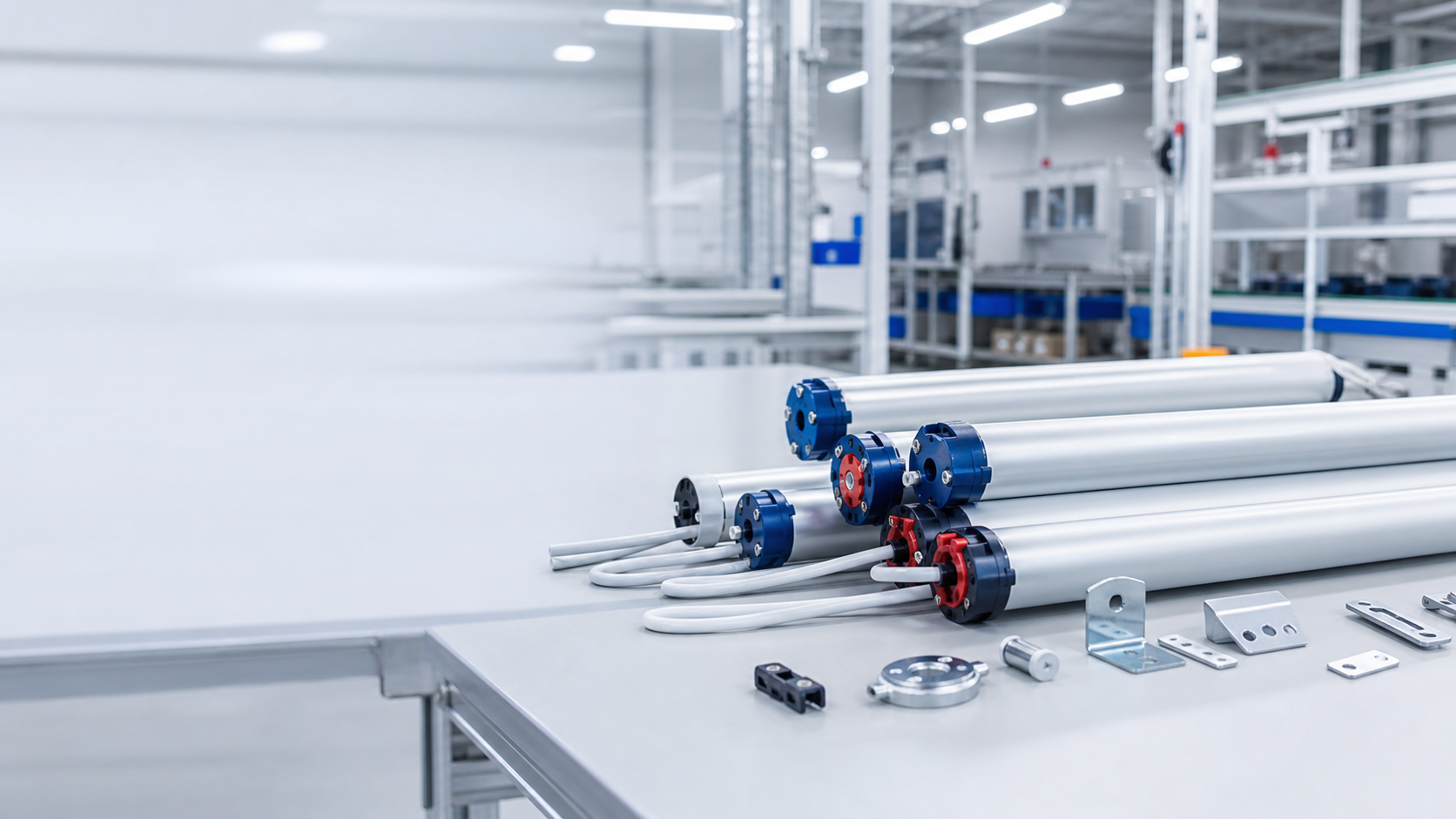
Compatibility is a major risk in OEM and replacement projects. Buyers should confirm not only motor diameter but the full accessory interface: tube internal shape, crown size, drive wheel profile, bracket style, head type, cable exit and manual override clearance.
What to send to the supplier
- Tube diameter, wall thickness and internal profile drawing.
- Photos of existing crown, drive wheel, bracket and motor head.
- Required cable length, cable exit direction and plug type.
- Shutter box size and available space near the motor head.
- Any local accessory standard used by your factory or distributor network.
Compatibility checkpoints
| Part | Question | Risk if missed |
|---|---|---|
| Crown | Does it match the tube profile? | Limit counting and motor support may be inaccurate. |
| Drive wheel | Does it transfer torque cleanly? | Slippage, vibration or premature wear. |
| Bracket | Does the head fit the mounting system? | Installer modification and project delay. |
| Cable | Is the exit direction usable? | Wiring rework or damaged cable routing. |
Sample approval advice
Before mass production, test the motor with the real tube and accessory kit. Confirm smooth travel, correct limit setting, cable routing, bracket strength and packaging accuracy. Keep the approved accessory combination as a repeat-order reference.
Practical buyer scenario
A distributor wants one motor family to fit several local shutter systems. The motor diameter may be correct, but the tube profile, crown, drive wheel, bracket and cable exit can still be different. Walter should review drawings or photos before samples are approved.
Key procurement checks for tube and accessory compatibility
| Check | Why it matters | What to confirm |
|---|---|---|
| Tube profile | Decides crown and drive wheel shape | Photo, drawing or sample tube |
| Bracket system | Affects motor head installation | Bracket photo and fixing dimensions |
| Cable exit | Avoids strain inside the shutter box | Preferred cable direction and length |
| Accessory kit | Reduces installer mismatch | Crown, wheel, bracket and adapter list |
Common mistakes to avoid
- Checking only motor diameter
- assuming every octagonal tube uses the same crown
- forgetting bracket head style
- not confirming cable exit direction
- approving motor samples without final accessories
What to send to Walter
- Application and shutter type
- Tube diameter, curtain weight, width and travel height
- Voltage, control method and manual override need
- Accessory, certification, packaging and OEM requirements
- Quantity, target market and sample schedule
Related Walter motor pages
FAQ
What should I send before asking for price?
Send application, tube size, curtain weight or slat data, travel height, voltage, control method, accessories, quantity and target market.
Can Walter recommend a model from photos?
Photos help a lot, especially for tube, bracket and accessory matching. For final approval, drawings or samples are better.
Should this be confirmed before samples?
Yes. Confirming these details before samples reduces wrong model selection, rework and after-sales support problems.

