
Tubular Motor Selection
Tubular Motor Selection Guide
Torque chart, motor size, tube compatibility and application-based selection for B2B buyers
Choosing the right tubular motor is not only about torque. A reliable motor solution must match the application, tube diameter, shutter or fabric weight, speed, voltage, limit system, control method, accessories and project requirements. This guide helps B2B buyers, installers and OEM customers select a suitable motor for roller shutters, roller blinds, awnings, zip screens and other shading systems.
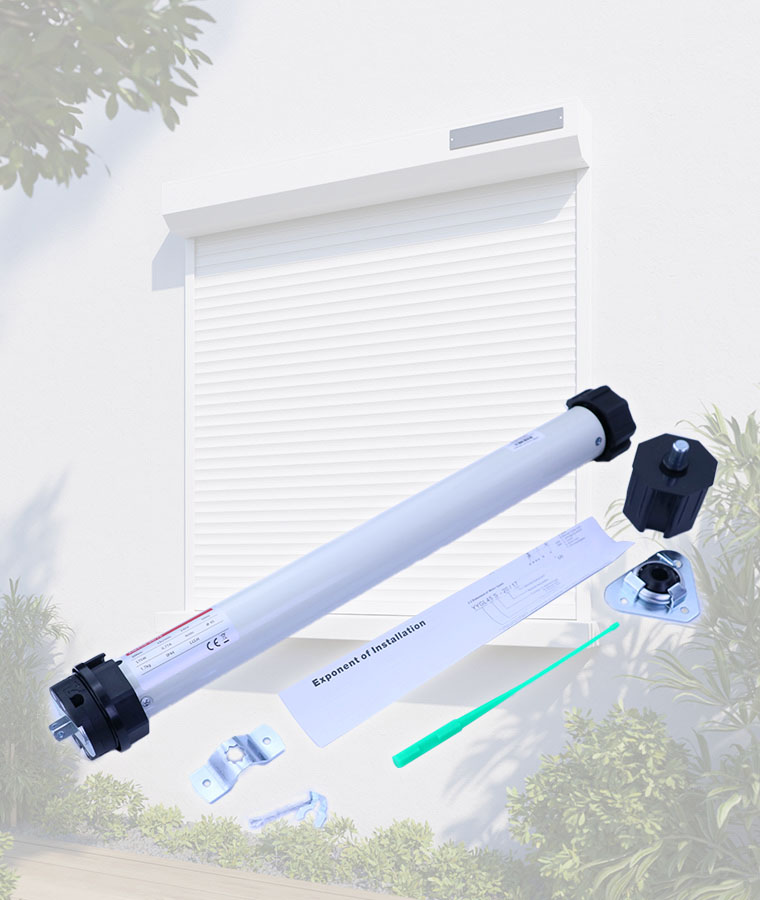
Quick Answer: How Do You Choose a Tubular Motor?
- Confirm the application.
- Measure width and height.
- Calculate shutter or fabric load.
- Check tube diameter.
- Select motor diameter and torque.
- Confirm voltage and speed.
- Choose limit system and control method.
- Match crown, drive wheel and bracket.
- Confirm testing, certification and OEM requirements.
7-Step Tubular Motor Selection Process
Step 1: Confirm application
Identify roller blinds, roller shutters, zip screens, awnings, Venetian blinds, projection screens or heavy-duty shutters.
Step 2: Measure width and height
Dimensions affect load, tube diameter, motor size and torque range.
Step 3: Calculate weight or load
Include shutter weight, fabric weight, bottom bar, friction and a reasonable safety margin.
Step 4: Check tube diameter
Tube diameter affects motor diameter, crown, drive wheel and usable output torque.
Step 5: Select torque and motor diameter
Use 25mm, 35mm, 45mm, 59mm or 92mm motor families according to application and load.
Step 6: Choose limit and control system
Compare mechanical limit, electronic limit, built-in receiver, parallel control, smart control, battery and solar options.
Step 7: Confirm accessories and project requirements
Confirm crown, drive wheel, bracket, cable, plug, packaging, certification and OEM requirements.
Tubular Motor Selection Chart by Application
| Application | Typical Motor Diameter | Common Torque Range | Tube Compatibility | Recommended Walter Series | Buyer Note |
|---|---|---|---|---|---|
| Small roller blinds | 25mm | 0.8-1.5Nm | Small blind tubes | WM25 Series | Check quiet operation, fabric weight and tube inner diameter. |
| Large roller blinds | 35mm | 3-10Nm | Standard blind tubes | YYGL35 Series | Confirm fabric weight, tube profile and control preference. |
| Roller shutters | 45mm | 10-50Nm | 60mm, 70mm or similar shutter tubes | YYGL45 Series | Calculate shutter weight before choosing torque. |
| Zip screens | 45mm | 10-50Nm | Project-specific screen tubes | 45mm screen-compatible series | Check side-channel friction and tension-related project conditions. |
| Awnings | 45mm / 59mm | 20-100Nm | Awning roller tubes | YYGL45 / YYGL59 Series | Review duty cycle, outdoor heat and wind-related use conditions. |
| Venetian blinds | Specialized | Application-specific | Headrail or dedicated system | Project-based selection | Confirm mechanism, control precision and installation space. |
| Projection screens | 35mm / 45mm | Low to medium | Screen roller tube | Quiet motor series | Quiet movement and positioning accuracy matter. |
| Heavy-duty shutters | 59mm | 60-140Nm | Large shutter tubes | YYGL59 Series | Confirm structure, actual load and installation direction. |
These are practical starting points, not absolute guarantees. Final selection depends on actual load, tube, installation and project conditions.
Roller Shutter Motor Torque Chart
This chart is a practical reference for roller shutter motor selection.
| Torque | Tube Diameter | 1.5 Meter | 2 Meter | 2.5 Meter | 3 Meter | 3.5 Meter | 4 Meter | 5 Meter |
|---|---|---|---|---|---|---|---|---|
| 6Nm | Phi 40mm | 11kg | 9.5kg | 9kg | 8kg | |||
| 10Nm | Phi 40mm | 20kg | 19kg | 18kg | 17kg | |||
| 13Nm | Phi 40mm | 26kg | 24kg | 23kg | 22kg | |||
| 15Nm | Phi 50mm | 34kg | 32kg | 30kg | 28kg | |||
| 15Nm | Phi 60mm | 32kg | 30kg | 28kg | 26kg | |||
| 20Nm | Phi 50mm | 46kg | 44kg | 41kg | 39kg | |||
| 20Nm | Phi 60mm | 42kg | 40kg | 38kg | 36kg | |||
| 30Nm | Phi 60mm | 60kg | 58kg | 56kg | 54kg | |||
| 40Nm | Phi 60mm | 83kg | 79kg | 72kg | 69kg | |||
| 40Nm | Phi 70mm | 70kg | 68kg | 66kg | 64kg | |||
| 50Nm | Phi 60mm | 105kg | 101kg | 97kg | 93kg | |||
| 50Nm | Phi 70mm | 98kg | 94kg | 90kg | 86kg | |||
| 80Nm | Phi 70mm | 164kg | 156kg | 140kg | 129kg | 110kg | 80kg | 70kg |
| 100Nm | Phi 70mm | 202kg | 195kg | 176kg | 162kg | 130kg | 100kg | 90kg |
| 120Nm | Phi 70mm | 232kg | 208kg | 190kg | 178kg | 178kg | 120kg | 110kg |
| 140Nm | Phi 70mm | 258kg | 234kg | 216kg | 200kg | 165kg | 140kg | 130kg |
Final selection should consider shutter material, bottom bar, friction, tube condition, installation direction and safety margin.

How to Calculate Roller Shutter Motor Torque
Estimated shutter weight = Width x (Height + allowance) x slat weight per m2
Height allowance can cover hidden curtain length and installation margin. Bottom bar weight, friction and safety margin should also be considered. Foam-filled aluminium slats may vary by profile and supplier, so final torque should be confirmed by actual project data.
| Reference Slat | Approximate Weight | Selection Note |
|---|---|---|
| 40mm foam-filled aluminium slat | Around 4.5 kg/m2 | Reference value only. |
| 55mm foam-filled aluminium slat | Around 6 kg/m2 | Reference value only. |
These are reference values only. Actual slat weight may vary by profile, material and supplier. For roller blinds, use the dedicated roller blinds motor torque guide.
Calculation Examples
The examples below show how the formula and torque chart can be used as a starting point. They are not final engineering guarantees.
| Example | Estimated Weight | Chart Reference | Practical Selection Note |
|---|---|---|---|
| 2m x 2m roller shutter with 40mm foam-filled aluminium slats | 2m x (2m + allowance) x 4.5 kg/m2, plus bottom bar and friction | A 20Nm motor with a 50mm or 60mm tube is often a practical starting point for this load range. | Use 20Nm only after confirming tube diameter, bottom bar weight, side friction and installation direction. |
| 2m x 2m roller shutter with heavier 55mm foam-filled aluminium slats | 2m x (2m + allowance) x 6 kg/m2, plus bottom bar and friction | A 20Nm option may be enough for a clean, low-friction installation, while 30Nm gives more margin when the shutter is heavier or friction is higher. | Compare 20Nm and 30Nm with actual slat weight, tube condition and safety margin before order. |
For a real RFQ, send Walter the shutter width, height, slat material, estimated weight, tube diameter, bottom bar details and required voltage. Walter can help decide whether 20Nm is sufficient or whether 30Nm is the safer choice.
Tube Diameter and Motor Diameter Matching
| Motor Diameter | Typical Torque Range | Common Tube Type | Typical Application | Buyer Note |
|---|---|---|---|---|
| 25mm | 0.8-1.5Nm | Small blind tube | Small roller blinds | Check tube inner diameter and quiet movement needs. |
| 35mm | 3-10Nm | Standard blind and small shutter tubes | Large blinds, small shutters | Good for compact systems with moderate load. |
| 45mm | 10-50Nm | 60mm / 70mm shutter or awning tubes | Roller shutters, awnings, zip screens | Common B2B project range. |
| 59mm | 60-140Nm | Large shutter and awning tubes | Heavy-duty shutters and larger awnings | Confirm bracket, tube strength and installation direction. |
| 92mm if relevant | Project-specific high torque | Large industrial tubes | Special heavy systems | Use only with confirmed project data. |
Tube diameter affects crown and drive wheel. A wrong tube adapter can cause slipping, noise or installation failure.
Limit System and Control Method Selection
| Control / Limit Type | Best For | Advantages | Buyer Note |
|---|---|---|---|
| Mechanical limit motor | Cost-sensitive shutters and blinds | Simple setting and stable basic control | View mechanical limit motor |
| Electronic limit motor | Projects needing electronic stop setting | More flexible setup and control integration | View electronic limit motor |
| Built-in receiver motor | Remote-control roller shutters and blinds | Receiver integrated into motor body | View built-in receiver motor |
| Parallel control motor | Wired multi-motor projects | Clear wiring logic for grouped systems | View parallel control motor |
| Smart home motor | App, gateway or voice-control systems | Supports modern shading control architecture | View smart home motor |
| Battery tubular motor | Retrofit blinds without mains wiring | Cleaner installation where wiring is difficult | View battery tubular motor |
| Solar rechargeable motor | Selected retrofit shading projects | Can reduce wiring work when project conditions fit | Confirm solar exposure and battery requirements before order. |
Application-Specific Selection Notes
Roller blinds
Prioritize quiet operation, small tube compatibility, fabric weight and optional smart control. View roller blinds motor options.
Roller shutters
Check torque, brake holding, tube size and shutter weight. View roller shutter motor options.
Zip screens
Confirm stable movement, wind-load related application conditions, fabric tension and side-channel friction. View zip screen motor options.
Awnings
Review torque, heat, duty cycle and wind-related use conditions. View awning motor options.
Projection screens
Quiet movement, smooth starts and positioning accuracy are usually more important than high torque.
Venetian blinds
Precise control and special mechanism requirements should be confirmed before model selection. View Venetian blinds motor options.
Common Selection Mistakes
| Mistake | Why It Happens | Result | How Walter Helps Avoid It |
|---|---|---|---|
| Choosing torque by guesswork | No load calculation is made | Motor may overload or be oversized | Review weight, tube, friction and margin. |
| Ignoring tube diameter | Only curtain size is checked | Crown or drive wheel mismatch | Match motor body and tube adapter. |
| Using the same motor for blinds and shutters | Applications look similar from outside | Noise, size or torque mismatch | Separate blind and shutter requirements. |
| Ignoring bottom bar and friction | Only slat area is calculated | Motor cannot lift smoothly | Add bottom bar, side friction and margin. |
| Wrong limit system | Control requirement is unclear | Setup and service issues | Compare mechanical and electronic options. |
| Wrong voltage | Destination market is not confirmed | Installation failure or unsafe wiring | Confirm AC/DC and market voltage. |
| Wrong control method | Remote, switch or smart needs are not defined | Incompatible project controls | Confirm wiring and control architecture. |
| No accessory confirmation | Bracket, crown and drive wheel are ordered later | Installation delay | Prepare accessory list before order. |
| No safety margin | Only ideal lab condition is considered | Overheating or short service life | Use project data and reasonable margin. |
| Comparing price without checking specification | Only unit price is compared | Wrong motor class or missing accessories | Compare torque, tube fit, control, accessories and support. |
What Information Walter Needs for Selection
- Application
- Width and height
- Shutter/fabric material
- Estimated weight
- Tube diameter
- Required torque if known
- Speed
- Voltage
- Limit type
- Control method
- Quantity
- Cable length and plug
- Accessories
- Destination market
- Certification requirement
- OEM packaging or private label requirement
Walter Engineering Support
Walter can use project data to recommend motor diameter, confirm a torque range, match tube adapters, choose limit systems, compare AC/DC/battery/smart control options and support OEM project selection. The purpose is to reduce selection errors before sample testing and mass production, not to replace final project verification.
Selection Reference Images
Original reference images from the previous selection page are retained and reorganized for selection context.

FAQ
How do I choose a tubular motor?
Start with application, load, tube size, torque range, voltage, limit system, control method and accessories.
What torque tubular motor do I need?
Required torque depends on curtain or shutter weight, tube diameter, friction, duty cycle and safety margin.
How do I calculate roller shutter motor torque?
Estimate shutter weight from width, height and slat weight per square meter, then add allowance for bottom bar, friction and project margin.
What size tubular motor fits my tube?
Motor diameter must match the roller tube inner diameter and tube profile through the correct crown and drive wheel.
What is the difference between 35mm and 45mm tubular motors?
35mm motors are common for lighter blinds and smaller shutters, while 45mm motors cover higher torque and larger tubes.
Can I use a roller shutter motor for roller blinds?
Sometimes, but it may be oversized, noisier or incompatible with a small blind tube. Select by load and tube size.
Should I choose mechanical limit or electronic limit?
Mechanical limits are simple and cost-effective; electronic limits can support more precise or receiver-based control.
What information is needed for motor selection?
Provide application, dimensions, weight, tube size, voltage, control method, quantity and destination market.
Is a higher torque motor always better?
No. Oversized motors can add cost, size and speed or noise mismatch.
Can Walter help select motors for OEM projects?
Walter can review project data and suggest suitable motor series, torque, tube adapters and control options.
How do tube diameter and crown/drive wheel affect selection?
The motor, crown and drive wheel must match the tube profile so torque transfers correctly without slipping, noise or installation failure.

