
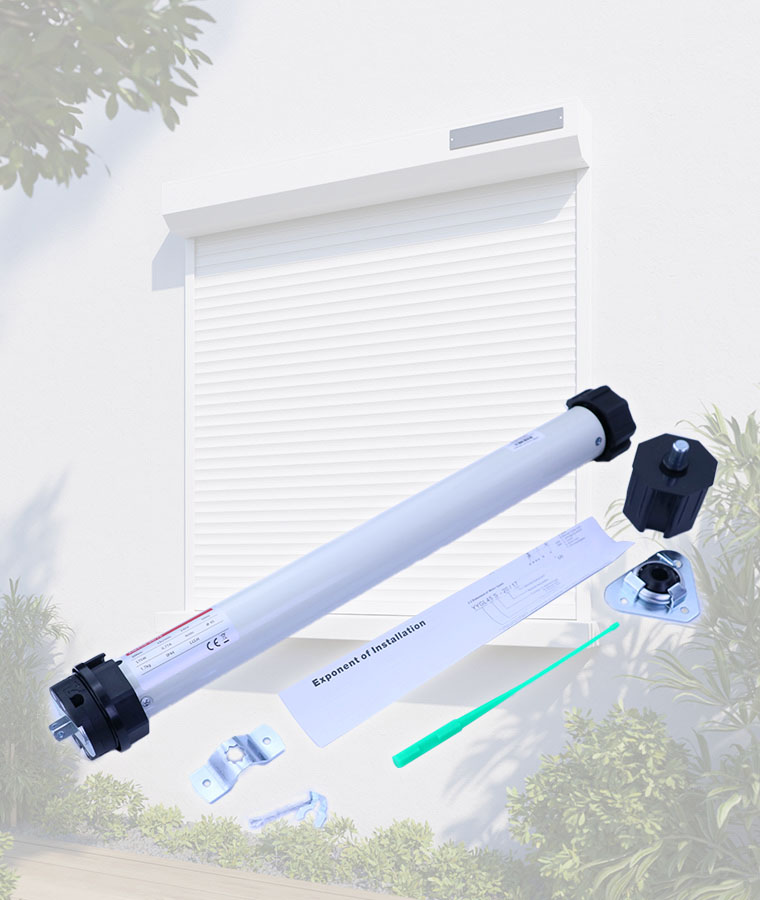
Risk scenario guide
Manual Override for Power Failure
Manual override is not a decoration on the motor head. It is an emergency operation decision. Buyers should specify it when power failure can block access, stop business or create a safety risk. They should avoid it when the system is too small, lacks space or does not need emergency hand operation.
Who this guide is for
Commercial shutter contractors, garage door suppliers, importers, installers and safety-focused buyers use this page to make one buying decision clearer before requesting price, samples or OEM support.
The page is intentionally written as a procurement guide. It does not replace product datasheets, local electrical rules, final system testing or installer responsibility.
Why manual operation is a procurement risk issue
A motorized shutter that cannot move during power failure may be acceptable for a light indoor blind, but it can be a serious problem for a garage door, shopfront shutter or commercial access point. The buyer must decide whether the end user needs a way to operate the system manually when electricity is not available.
Manual override adds mechanical parts, head length, accessory requirements and installation constraints. It can affect motor cost, bracket choice, crank path and packaging. Therefore it should be specified early in the RFQ, not added after the motor and bracket are selected.
The correct question is not simply whether manual override is available. The correct question is whether the application, installation space and user access make manual operation practical.
Where manual override is necessary
Manual override is commonly considered for garage doors, shopfront shutters, commercial shutters, large awnings and emergency access areas. These applications can create business interruption or access problems if power fails. In some projects, the building owner or contractor may require emergency hand operation as part of the specification.
For heavy shutters, the crank system and user access must be realistic. If the crank path is blocked by a wall, ceiling, signboard or cover, the feature may not work in practice. The buyer should check where the crank will be stored and how the user reaches it.
For outdoor or public-facing projects, durability and misuse should also be considered. Manual operation should be explained clearly in the user manual and supported with the correct crank, bracket and installation clearance.
| Application | Recommendation | Reason |
|---|---|---|
| Garage door | Required or strongly recommended | Power failure can block vehicle access |
| Shopfront shutter | Required or strongly recommended | Business access may depend on operation |
| Commercial shutter | Often required | Higher access and service risk |
| Large awning | Optional depending on project | Emergency retraction may be useful |
| Small indoor blind | Usually not recommended | Added cost and space may not be justified |
| Battery blind | Usually not needed | Backup power concept is different |
Where it may not be necessary
Small indoor blinds, light residential shades and many battery blind systems usually do not need manual override. The added head size, crank accessories and installation complexity can create more problems than value. Buyers should avoid adding the feature only because it sounds safer.
Manual override may also be unsuitable when the tube is too small or the head box does not provide enough clearance. In these cases, the buyer should consider a different system design, a battery solution or a clear service process instead of forcing manual override into the project.
The supplier should be told the actual application and installation space. This allows Walter to recommend whether manual override is required, optional or not recommended for that configuration.
Installation and accessory requirements
Manual override normally requires a crank or hand tool, a suitable motor head, bracket support and enough clearance for operation. The crank path must be confirmed. If the crank cannot be inserted or turned comfortably, the emergency feature will not help the end user.
The buyer should check whether manual override changes motor length, head design, bracket selection, carton size or accessory packing. For OEM projects, the crank and instruction sheet should be included in sample approval. For distributors, spare cranks and replacement accessories should be considered.
When the project uses a cover box or concealed installation, manual override access must be shown in drawings. Do not rely on the installer to solve access after shipment.
- Confirm power failure risk and access requirement.
- Check tube size and motor head clearance.
- Confirm crank path and end user access.
- Approve bracket and crank accessories with the sample.
- Include manual operation instructions in the user manual.
Buyer checklist before ordering
Before ordering, decide whether manual override is required, optional or not recommended. If required, send drawings or photos showing the head box, bracket area and crank access. Confirm whether the end user can safely reach and operate the crank.
Send Walter the application, shutter dimensions, tube, load, voltage, installation photos and crank access requirement. A clear RFQ prevents the wrong motor head or missing accessories from reaching the job site.
Manual Override Access Test
Manual override must be approved in the final installation position, not only on the motor body. The crank eye, bracket, wall clearance and shutter box must allow a person to operate the system when power is unavailable.
Test the override with the real load. A manual override that turns smoothly on a light bench setup may feel too heavy when connected to a large shutter or high-friction guide rail.
- Confirm crank access after the motor is installed.
- Check the operating angle and wall clearance.
- Test manual movement with the actual shutter or awning load.
- Confirm whether the user can reach the crank safely.
- Record the approved crank length and accessory code.
Power Failure Scenario Review
Manual override is usually selected because the application cannot remain closed or open during a power failure. Shopfront shutters, garage doors, security shutters and some outdoor systems need a clear emergency-use plan.
The buyer should decide who will use the override: homeowner, shop staff, security team or installer. That decision affects crank position, instruction language and whether additional warning labels are needed.
Crank, Bracket and Head Clearance Approval
Manual override changes more than the motor head. The bracket, crank eye, crank handle, gear position and installation space must be approved as one package. If the head is hidden inside a box, access can become the real failure point.
For OEM packaging, confirm whether the crank is supplied with every motor, packed separately or offered as an optional accessory. Missing cranks create immediate after-sales problems even when the motor itself is correct.
| Item | What to check | After-sales risk |
|---|---|---|
| Crank eye | Position and access angle | User cannot operate during outage |
| Crank handle | Length and connection type | Wrong tool shipped to site |
| Bracket | Support and clearance | Head blocked by frame or wall |
| Instruction | Emergency operation steps | User damages limit or system |
Manual Override RFQ Details Walter Needs
Send the application, load, installation height, head space, bracket style and reason manual override is required. If the system is for a public or commercial site, mention who is expected to operate it during power failure.
Photos of the installation position are especially useful. They show whether the crank can be reached and whether the bracket or shutter box will block the override point.
Related guide pages
Use these pages to complete the buying decision before requesting samples or a final quotation.
Ready for quotation
Send the application details before asking for final price.
A complete RFQ helps Walter recommend the right motor, accessories, control method and document package.

