
Motor manufacturing quality system
Quality Control for Motor Manufacturing
Quality is not only final inspection. For WALTER MOTOR, it is a controlled order path from requirement review and incoming materials to process checkpoints, electrical safety testing, functional validation, aging checks, final inspection, packaging control and shipment traceability.
Quality Is Built Into the Manufacturing Process
WALTER MOTOR manufactures motor and smart shading products for tubular motors, roller shutter motors, roller blinds motors, awning motors, zip screen motors, curtain motors, Venetian blinds motors, smart shading motors, controllers, accessories and OEM/ODM projects. The quality system must be read as a complete manufacturing discipline, not as one final checklist.
Different product categories require different inspection priorities. Heavy-duty roller shutter motors need load behavior and braking reliability. Roller blinds and curtain motors need smooth movement, quiet operation and travel accuracy. Smart motors need control response, pairing and electronic stability checks according to the confirmed model.
Use this page to prepare better RFQ and audit questions: what is reviewed before production, what is checked during manufacturing, which tests apply to your motor type, and how traceability supports after-sales analysis.
Inspection Logic From RFQ to Shipment
The inspection plan should match the product, application and customer requirement. Depending on product type, the items below describe what may be reviewed, not a universal promise that every order uses every test.
| Quality Stage | What Walter Reviews | Buyer Risk Reduced |
|---|---|---|
| Requirement review | Application, torque, speed, voltage, control method, cable, plug, bracket, crown, wheel, label, packaging and destination market requirements | Reduces wrong product selection, accessory mismatch, cable mistakes and project delays |
| Incoming materials | Silicon steel, wire, tubes, aluminum parts, gears, bearings, brakes, capacitors, PCBA, plastics, cables, plugs, labels, cartons and manuals | Reduces inconsistency before parts enter production |
| Dimensional and process control | Tube, shaft, gear, bracket, crown, drive wheel, plastic part, rotor machining, stator production and assembly checkpoints | Protects installation fit, noise behavior, torque transmission and repeat-order consistency |
| Electrical safety | Insulation resistance, dielectric withstand or Hi-Pot, winding resistance, running current, power consumption, abnormal voltage and ground continuity where applicable | Supports safer motor operation under confirmed product and order conditions |
| Performance validation | Speed, torque output, braking performance, limit setting, limit repeatability, travel accuracy, load behavior, noise and vibration | Reduces application mismatch and after-sales risk |
| Smart and DC motor checks | Remote pairing, receiver response, WiFi, Zigbee, Bluetooth or app-control response, charging behavior and circuit stability where applicable | Confirms electronic function according to the selected motor type |
| Final inspection and packaging | Appearance, model label, batch identification, cable, plug, accessories, manual, packaging, carton mark, quantity and customer-specific requirements | Reduces shipment errors, labeling issues and packaging disputes |
Factory and Quality Control Evidence
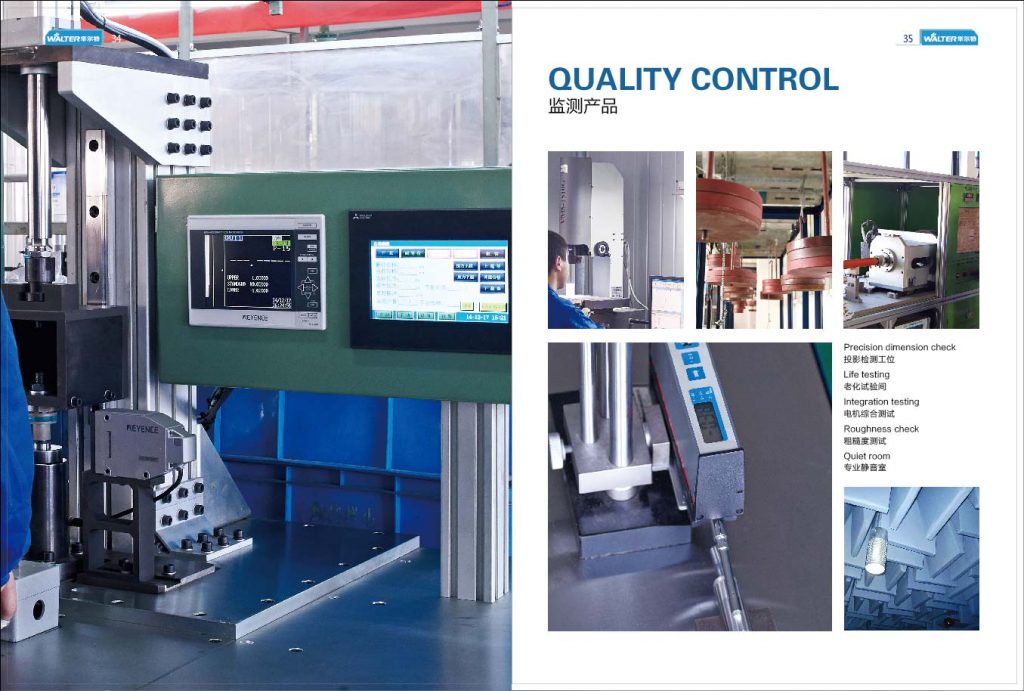
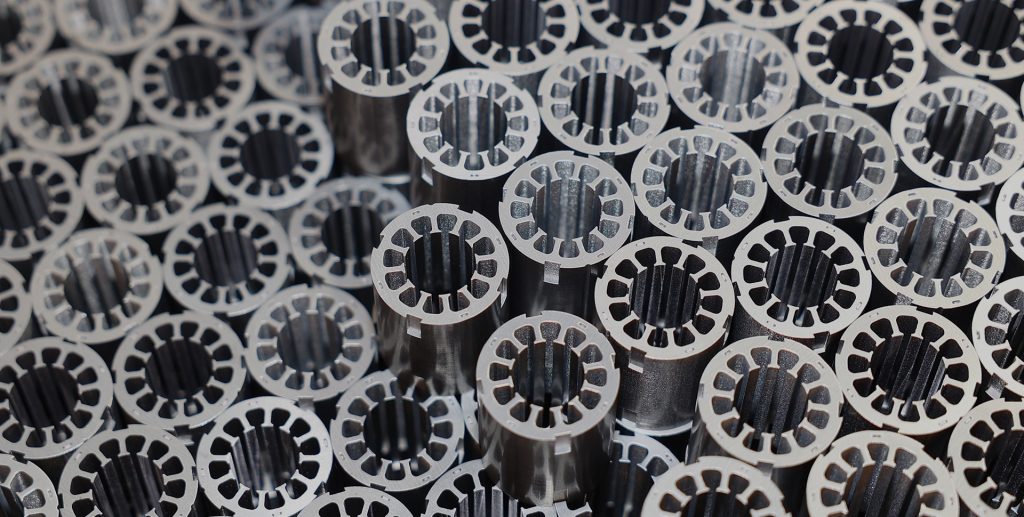
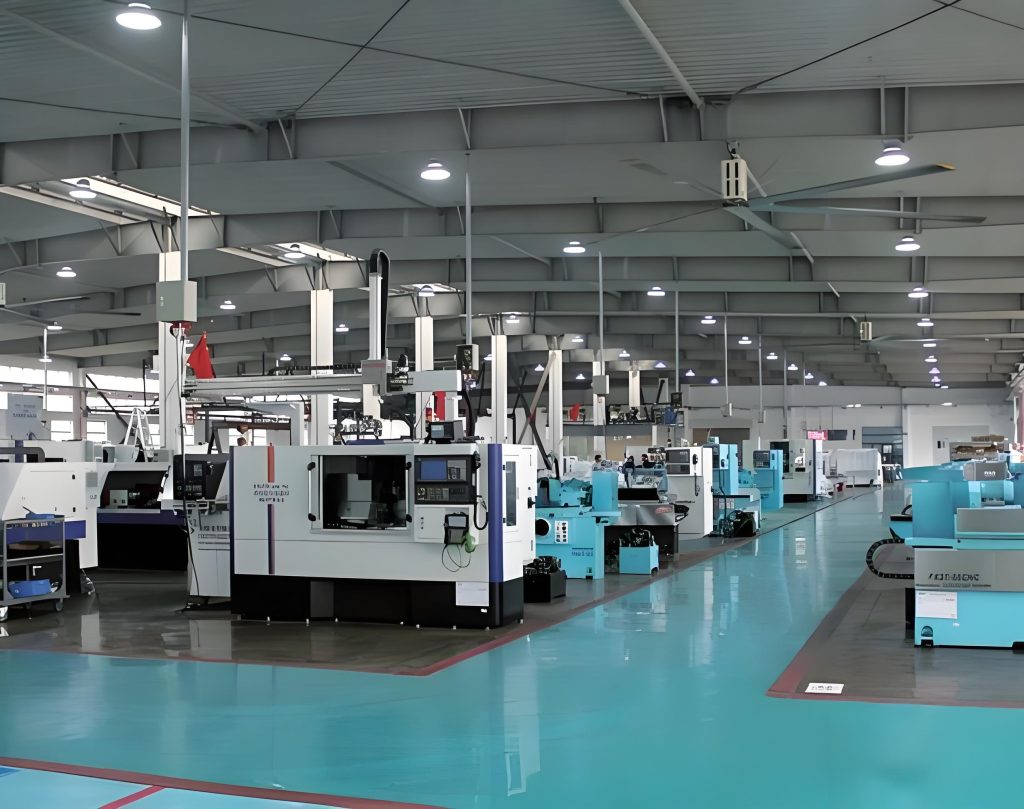
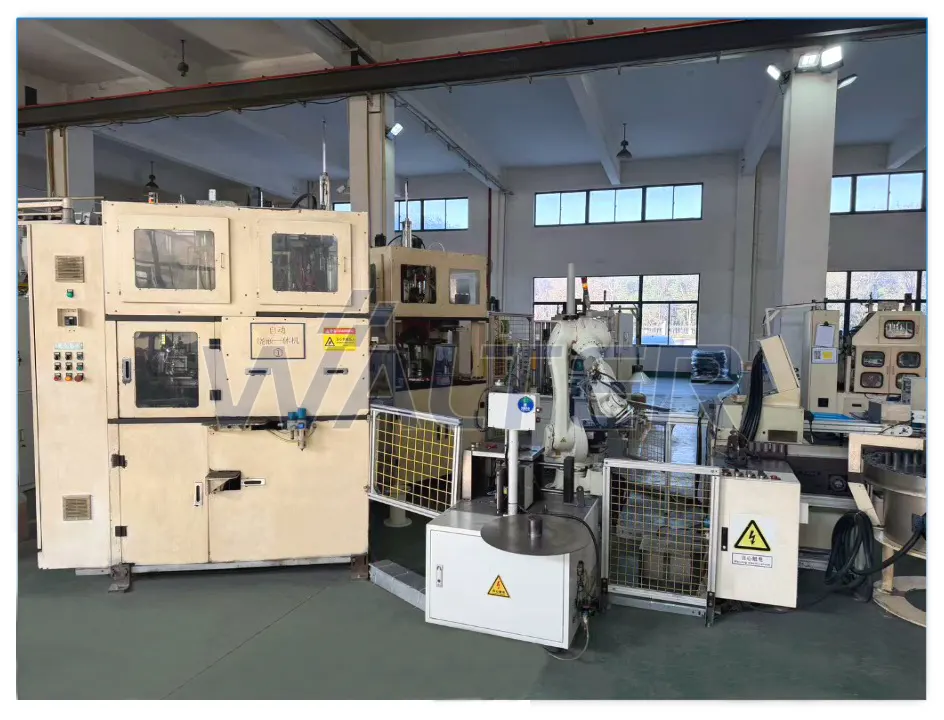
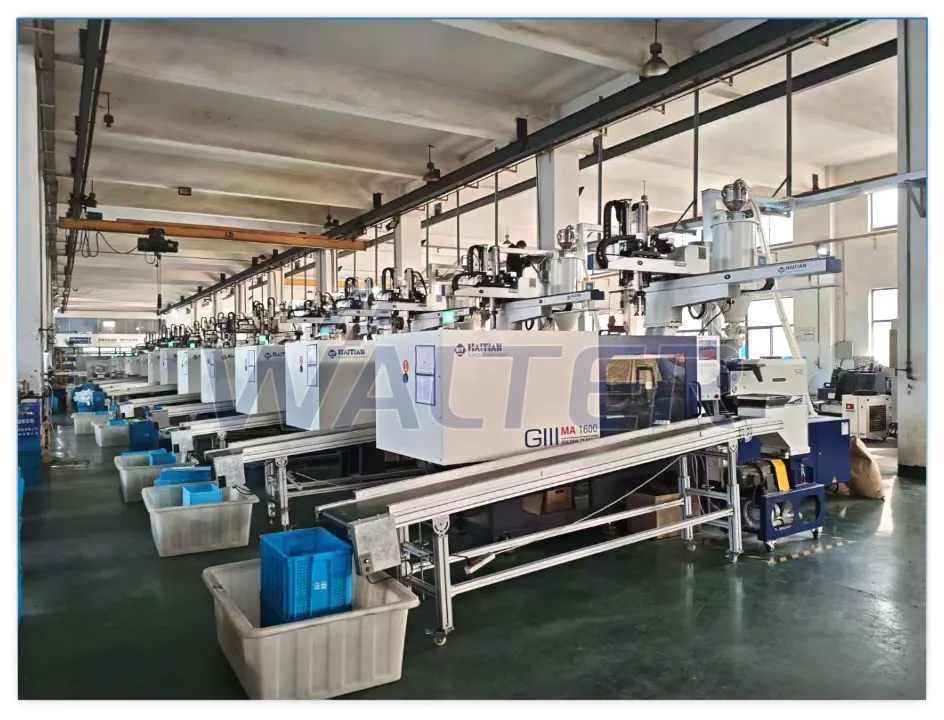
Quality control is easier to evaluate when buyers can connect inspection language with real manufacturing scenes. The images below show factory capability, motor testing, incoming material control, machining, stator production and component process control used in Walter Motor’s manufacturing environment.

Requirement Review Before Production
Quality work starts before production begins. For standard orders, samples, trial orders and OEM/ODM projects, Walter reviews application requirements, torque, speed, voltage, control method, cable, plug, bracket, crown, wheel, packaging, private label needs and destination market requirements.
This review helps avoid wrong product selection, mismatched accessories, incorrect cable configuration, packaging mistakes and project delays.
Supplier and Incoming Material Inspection
Incoming inspection may cover silicon steel laminations, copper wire or CCA wire where applicable, steel tubes, aluminum parts, gears, bearings, brakes, capacitors, PCBA and electronic components, plastic parts, cables, plugs, labels, cartons, manuals and customized accessories.
Control points include dimensional inspection, appearance inspection, material consistency, batch identification, supplier conformity and non-conforming material isolation or review before production release.
In-Process Quality Control
Process checkpoints are placed around high-speed stamping, stator production, rotor processing, CNC machining, gearbox assembly, brake assembly, limit system assembly, PCBA or electronic control assembly where applicable, and final motor assembly.
Process control matters because small variations can affect noise, torque transmission, braking reliability, limit accuracy, installation compatibility and mass production consistency. According to the agreed quality plan, production control may include standardized work instructions, key process parameter checks, tooling control, quality records, dimensional control for repeat-order consistency, and non-conforming product isolation and review where applicable.
Electrical Safety, Function and Aging Tests
For Roller Shutter Buyers: Evaluate Reliability Before Bulk Ordering
One unloaded sample cannot demonstrate batch reliability. Before approving a roller shutter motor for volume purchasing, buyers should review load behavior, brake holding, limit repeatability, running current, temperature rise, noise consistency, aging conditions, inspection records and batch traceability against the agreed application and duty cycle. Use the dedicated guide as a practical supplier-audit and purchase checklist.
Review the Roller Shutter Motor Reliability & Batch Quality Guide
Final Inspection, Packaging and Shipment Control
Before shipment, inspection checks the model label, barcode or batch identification, appearance, cable, plug, accessories, instruction manual, packaging, carton mark, quantity and customer-specific packaging requirements. Shipment release follows the agreed inspection process.
Quality Control by Product Category
| Product Category | Main Quality Focus | Typical Inspection Points |
|---|---|---|
| Tubular Motors | Torque, braking, limit accuracy, load performance and noise control | Torque output, current, brake holding force, limit repeatability, aging validation |
| Roller Shutter Motors | Load capacity, braking reliability and installation safety | Load-related validation, brake test, mechanical or electronic limit test, current and temperature rise checks |
| Roller Blinds / Roller Shade Motors | Quiet running, travel accuracy, positioning repeatability and smart control | Speed, noise, limit setting, remote pairing, battery or charging checks where applicable |
| Awning and Zip Screen Motors | Outdoor application stability, torque output and repeated operation | Torque, limit setting, running time, accessory compatibility and application-based validation |
| Curtain Motors | Smooth movement, quiet operation, control response and track compatibility | Noise, running stability, control response, travel behavior and accessory fit |
| Venetian Blinds Motors | Tilt control, positioning accuracy and control response | Travel accuracy, angle response, current, receiver or smart-control checks where applicable |
| Smart Motors and Receiver Motors | Signal response, pairing stability, electronic limit and app or control compatibility | Remote, receiver, WiFi, Zigbee, Bluetooth or app-control function checks where applicable |
| Battery / DC Motors | Charging stability, circuit behavior, DC running performance and safety | Charging behavior, circuit stability, current, voltage range and repeated operation checks |
| Automotive Sunshade Motors | Compact DC motor behavior and project-specific performance | Voltage range, movement stability, current, sample validation and customer project requirements |
| Controllers and Accessories | Compatibility, appearance, labeling and installation reliability | Function test, pairing test, appearance check, packaging and label verification |
| OEM/ODM Customized Projects | Customer-specific specification, private label, accessories and packaging control | Sample confirmation, trial order review, special test items and shipment release checks |
Key Testing Items
Inspection scope depends on product model, application, customer requirement and order agreement. Typical checkpoints may include:
Traceability and After-Sales Analysis
Quality feedback is analyzed as a system issue, not only as a single product complaint. Walter can review batch records, product labels, barcodes if available, shipment records, customer photos or videos, installation details, application conditions and returned samples where necessary.
The purpose is root cause analysis, corrective action and preventive improvement across materials, process, testing, packaging, installation guidance or customer-specific requirements.
OEM/ODM Quality Cooperation
OEM and ODM quality cooperation can include requirement discussion, sample confirmation, trial order review, production control, private label, customized cable, plug, accessories, packaging, customer-specific test items and continuous improvement based on market feedback.
Why Quality Control Matters for Global Buyers
Related Company Pages
Frequently Asked Questions About Quality Control
Do you only control quality for tubular motors?
No. WALTER MOTOR applies quality control across tubular motors, curtain motors, roller shade motors, roller shutter motors, awning motors, zip screen motors, smart motors, controllers, accessories and OEM/ODM customized motor projects.
Do you inspect materials before production?
Yes. Key materials and components are reviewed before production, including steel tubes, silicon steel laminations, copper wire or CCA wire where applicable, gears, bearings, brakes, capacitors, electronic components, plastic parts, cables, plugs, labels, cartons and customized accessories.
What tests are performed on finished motors?
Depending on the product model and order requirements, finished motors may be checked for electrical safety, running current, speed, torque, brake holding force, limit accuracy, control response, noise, vibration, aging performance, appearance, labels and packaging.
Can you support OEM or project-specific quality requirements?
Yes. For OEM, ODM and project orders, WALTER MOTOR can review customer-specific labels, cables, plugs, brackets, crowns, wheels, packaging, test items, sample validation and destination-market requirements before production.
How do you handle quality feedback after shipment?
Quality feedback is analyzed with product information, batch records, labels, photos, videos, installation details, application conditions and returned samples where necessary. The goal is root-cause analysis and corrective improvement, not only single-product complaint handling.
Can you test smart motors and receiver motors?
Yes, where applicable. Smart and receiver motor checks may include remote pairing, receiver response, electronic limit behavior, WiFi, Zigbee, Bluetooth or app-control response, charging behavior and circuit stability according to the confirmed model.
Do you support traceability for OEM orders?
Traceability can be supported through product labels, batch identification, shipment records, order records and customer-specific packaging or label requirements where agreed before production.
Can customers request additional testing before shipment?
Customers can request additional inspection or project-based validation during RFQ and sample review. Feasibility depends on motor type, application, order requirements and the agreed quality plan.
Discuss quality requirements for tubular motors, roller shutter motors, roller blinds motors, awning motors, zip screen motors, curtain motors, smart shading systems, controllers, accessories and OEM/ODM projects.
Contact WALTER MOTOR
