
Tubular Motor Production Process
From raw materials to final testing, Walter Motor controls key in-house manufacturing steps to produce stable tubular motors for roller shutters, roller blinds, awnings, zip screens and other sunshade systems.
What This Process Page Proves for B2B Buyers
Walter is not only assembling motors
The process includes tube forming and coating, power cable production, high-speed stamping, stator blueing, rotor die casting, shaft press-fitting, CNC machining, automatic winding, assembly and final testing.
Quality is controlled before final inspection
Material selection, dimensional control, insulation checks, winding tests, gearbox grease control and limit system assembly each remove a different production risk before the final motor test.
Traceability supports long-term supply
Warranty labels, batch records, inspection records and customer order tracking help distributors and OEM customers manage warranty claims and after-sales analysis.
17-Step Production Flow
The original production logic is preserved and reorganized as a clearer manufacturing flow. Each stage affects a specific buyer concern: torque consistency, insulation safety, noise control, corrosion resistance, travel limit accuracy, braking reliability or after-sales traceability.
Raw materials
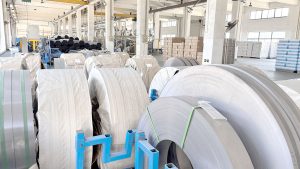
Silicon steel, copper wire, steel tube, aluminum, cable materials, plastics and coating powder are prepared.
Buyer value: More stable input materials for torque consistency and insulation safety.
Steel tube forming
Tube diameter, roundness, wall thickness and straightness are controlled before cutting.
Buyer value: Lower assembly deviation, vibration and abnormal noise risk.
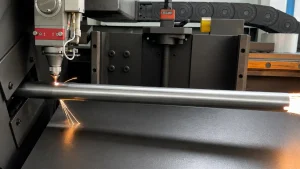
Laser cutting
Tube length and front/rear installation positions are cut to controlled dimensions.
Buyer value: More consistent fit between batches and fewer installation-position errors.
Powder coating
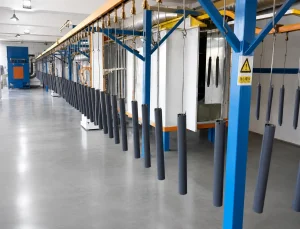
Tube surface treatment and powder coating protect the finished motor tube.
Buyer value: Better corrosion resistance and more consistent appearance for OEM projects.
Power cable production
3-core, 4-core and 5-core cable structures support different control methods.
Buyer value: Correct wiring and insulation stability for each motor version.
High-speed stamping
Stator and rotor laminations are stamped with controlled geometry.
Buyer value: Better magnetic consistency, torque stability and lower temperature-rise risk.
Stator blueing
Stator cores receive blueing treatment before winding.
Buyer value: More stable stator preparation before coil insertion and forming.
Rotor die casting
Aluminum die casting forms the rotor body.
Buyer value: More consistent rotor structure for stable running and output behavior.
Rotor shaft press-fitting
Shaft fit, depth and alignment are controlled before machining.
Buyer value: Improved concentricity, lower runout and better braking reliability.
CNC machining
Turning, outer diameter control, cleaning and rotor rib work are completed.
Buyer value: Lower friction, lower noise and smoother motor rotation.
Automatic stator winding
Winding, coil inserting, coil forming and slot insulation are completed.
Buyer value: Improved insulation safety, current stability and torque consistency.
Thermal protector installation
Thermal protection and secondary forming are completed before electrical checks.
Buyer value: Better protection against overheating in demanding operation.
Gearbox assembly
Gear position, meshing, clearance, direction and grease amount are controlled.
Buyer value: Lower wear, lower noise and more stable output transmission.
Limit system assembly
Mechanical or electronic limit systems are assembled for travel control.
Buyer value: More repeatable stop positions and better travel accuracy.
Final motor assembly
Stator, rotor, brake, gearbox, limit system, tube, cable and electrical parts are integrated.
Buyer value: Better alignment, lower friction and more stable finished-motor behavior.
Comprehensive testing
Running, noise, voltage, hi-pot, grounding, current, power, load, travel and brake tests are checked.
Buyer value: Fewer shipment defects and lower warranty risk.
Warranty label and traceability
Labels, batch records, inspection records and order tracking are connected.
Buyer value: Faster warranty verification, batch control and after-sales analysis.
Process Control Map
| Production Area | Control Focus | Buyer Risk Reduced |
|---|---|---|
| Raw materials | Silicon steel sheets, enameled copper wire, steel tube material, aluminum ingots, cable materials, engineering plastics and coating powder. | Unstable torque, poor insulation, higher noise, weak corrosion resistance and shorter service life. |
| Tube manufacturing | Diameter, roundness, straightness, laser cutting, installation position and surface coating. | Assembly deviation, abnormal vibration, poor fit and inconsistent motor running. |
| Stator and rotor manufacturing | Stamping, blueing treatment, rotor die casting, shaft press-fitting, CNC machining, cleaning and brake press-fitting. | Temperature rise, torque variation, rotation imbalance, noise and braking instability. |
| Electrical assembly | Automatic winding, coil inserting, slot insulation, inter-turn test, thermal protector installation and hi-pot test. | Hidden insulation defects, unstable current and field safety complaints. |
| Gearbox, limit system and final assembly | Gear meshing, grease amount, travel control, stop repeatability and component alignment. | Wear, noise, inaccurate limit position, unstable running and early service problems. |
| Testing and traceability | Moisture removal, running tests, noise checks, voltage tests, load tests, brake tests, labels and records. | Shipment defects, unclear batch responsibility and slow after-sales investigation. |
Raw Materials and Incoming Control
A reliable tubular motor starts before assembly. Walter uses materials for the tube, stator, rotor, winding, cable, insulation, gearbox and plastic parts. Important material groups include silicon steel sheets for laminations, enameled copper wire for stator winding, steel coils for motor tubes, aluminum ingots for rotor die casting, PVC and copper wire for cable production, electrostatic coating powder and engineering plastics such as PPS, PA66, PC, POM, PA6 and ABS for injection-molded components.
For buyers, this matters because material stability affects electromagnetic efficiency, torque output, insulation safety, noise control, corrosion resistance and long-term service life. The goal is not only to pass final inspection, but to make every production batch start from controlled inputs.
Tube Forming, Laser Cutting and Powder Coating
The motor tube is the mechanical reference for many later assembly steps. Tube forming, diameter control, roundness, straightness and laser cutting are managed before surface treatment. Installation position control helps the stator, rotor, gearbox, limit system and end parts fit into the tube with less assembly deviation.
Accurate tube dimensions help prevent assembly deviation, abnormal noise, vibration, friction and inconsistent performance after installation. Surface treatment and powder coating also help improve corrosion resistance and exterior consistency.
- Outer diameter consistency
- Inner diameter accuracy
- Tube roundness
- Wall thickness stability
- Straightness of the tube body
- Tube length
- Front installation position
- Rear installation position
- Cutting surface quality
- Dimensional consistency between batches
Power Cable Production
Walter supports 3-core, 4-core and 5-core cable options according to motor type and control method. Mechanical limit motors, electronic limit motors, built-in receiver motors and parallel control motors can use different wiring structures, so cable production must match the actual product specification. Where VDE-certified cable production applies to the original scope, it supports electrical safety, insulation stability and document review for importers and OEM customers.
Stator and Rotor Manufacturing
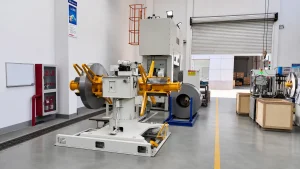
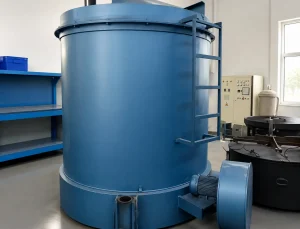
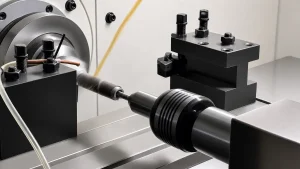
This is one of the strongest capability areas on the page. Walter’s process includes high-speed stamping for stator and rotor laminations, stator core blueing treatment, rotor aluminum die casting, motor shaft press-fitting, CNC machining and precision turning, rotor cleaning, rotor rib punching and brake structure press-fitting.
Stator lamination consistency
High-speed stamping and blueing treatment support repeatable stator geometry before winding, helping stabilize electromagnetic behavior and temperature rise.
Rotor balance and torque behavior
Die casting, shaft fit and machining influence rotation stability, torque consistency, friction and abnormal noise risk.
Brake reliability
Rotor rib work and brake press-fitting affect the motor’s stop behavior, especially in roller shutter and heavier sunshade applications.
- Lamination shape accuracy
- Slot dimension consistency
- Burr control
- Stacking consistency
- Material deformation control
- Shaft alignment
- Press-fitting depth
- Rotor concentricity
- Runout control
- Outer diameter accuracy
- Rotor cleaning
- Brake press-fitting reliability
Automatic Stator Winding and Electrical Safety Gate
Automatic winding, coil inserting, coil forming and slot insulation help make stator production more repeatable. After winding, inter-turn testing checks winding quality, thermal protector installation supports motor protection, secondary forming stabilizes the coil structure and hi-pot testing confirms insulation safety.
Only qualified stators should move to the next assembly stage. This is important because winding defects may not be visible from the outside but can affect current, heat, torque stability and electrical safety.
- Enameled wire winding
- Coil inserting
- Coil forming
- Slot insulation positioning
- Inter-turn test
- Thermal protector installation
- Hi-pot test
- Insulation confirmation
Gearbox, Limit System and Electrical Assembly
Gearbox assembly requires gear meshing control and correct grease amount. Poor grease control can increase wear or noise, while poor meshing can affect output stability. The limit system can be mechanical or electronic depending on the motor series. Travel control stability and stop position repeatability are important for roller shutters, roller blinds, awnings, zip screens and projection screen applications.
After gearbox and limit system work, capacitor, limit parts and other electrical components are assembled with the motor structure. The complete motor must keep alignment between the stator, rotor with brake, gearbox, limit system, tube, cable and end components.
- Gear position
- Gear meshing
- Transmission clearance
- Assembly direction
- Grease amount
Final Motor Assembly
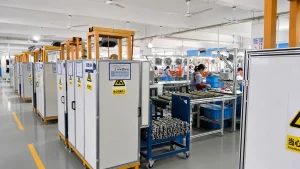
In final assembly, the stator, rotor with brake, gearbox, limit system, motor tube, cable and electrical components are integrated into a complete tubular motor. Alignment and assembly position control help reduce friction, unstable running and avoidable noise. This is where earlier process control becomes visible in the finished motor.
Testing and Quality Control Before Shipment
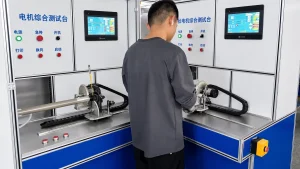
Walter’s testing process is broader than a final power-on check. It includes moisture removal, semi-finished motor running tests, abnormal noise inspection, high-voltage running, low-voltage running, hi-pot test, grounding test, current test, power test, load test, travel limit test, brake test and final electrical safety confirmation.
| Test Item | Purpose | Why It Matters to B2B Buyers |
|---|---|---|
| Moisture removal | Reduce moisture-related electrical risk before final confirmation. | Supports safer storage, shipment and first installation quality. |
| Semi-finished running test | Check early running behavior before final packaging. | Helps catch defects before costly finished-goods rework. |
| Abnormal noise inspection | Identify friction, vibration, gear or rotor-related noise. | Reduces installation complaints and distributor warranty pressure. |
| High-voltage and low-voltage running | Confirm operation under voltage variation. | Helps buyers manage real market power conditions. |
| Hi-pot and grounding test | Confirm insulation strength and grounding safety. | Supports importer electrical safety review and OEM quality control. |
| Current and power test | Check electrical behavior against expected range. | Helps identify motor mismatch or hidden winding issues before shipment. |
| Load test | Confirm motor performance under load. | Connects factory testing to real roller shutter, blind or awning operation. |
| Travel limit test | Check limit setting and stop position behavior. | Supports repeatable end-position control in installed systems. |
| Brake test | Confirm braking response and holding behavior. | Important for user safety, load holding and long-term application reliability. |
- Moisture removal
- Semi-finished running test
- Abnormal noise test
- High-voltage running test
- Low-voltage running test
- Hi-pot test
- Grounding test
- Current test
- Power test
- Load test
- Travel limit test
- Brake test
- Electrical safety confirmation
Warranty Label, Batch Records and Traceability
Traceability is important for OEM and distributor buyers because the sales relationship continues after shipment. Warranty labels, traceability labels, batch records, inspection records and customer order tracking help Walter and the customer review production batches, analyze warranty claims and manage after-sales service. For repeat orders, traceability also supports comparison between sample approval, mass production and future batches.
- Warranty label
- Traceability label
- Production batch records
- Inspection records
- Warranty verification
- After-sales analysis
- Customer order tracking
Applications and Motor Selection
Different applications require different torque ranges, tube sizes, speed, control methods and limit systems. A roller shutter motor may prioritize load holding and brake reliability, while a roller blinds motor may require quieter running, compact dimensions and precise end-position repeatability. Awnings, zip screens, projection screens, garage doors and heavy-duty shutter applications should be matched with the correct motor series and accessories.
| Application | Production Concern | Selection Link |
|---|---|---|
| Roller shutters | Torque, brake reliability, limit accuracy and long-term running stability. | Roller shutter motor |
| Roller blinds | Quiet operation, compact fit, smooth travel and stop repeatability. | Roller blinds motor |
| Awnings and zip screens | Outdoor durability, load behavior, tube compatibility and control method. | Selection by application |
| Projection screens and special sunshade systems | Stable running, precise stopping and low abnormal noise risk. | Tubular motors |
Why Walter Motor’s Production Process Matters
Stable quality between batches
Controlled materials, repeatable process steps and traceable records reduce variation across sample orders, first mass production and repeat shipments.
Lower abnormal noise risk
Tube accuracy, rotor machining, gearbox assembly, grease control and final noise inspection all help reduce avoidable running noise.
Better torque consistency
Stator and rotor consistency, winding control and load testing help keep motor output closer to the expected specification.
Better electrical safety control
Slot insulation, inter-turn testing, thermal protector installation, hi-pot testing and grounding checks support safer motor delivery.
More reliable limit and brake behavior
Gearbox, limit system and brake assembly checks support repeatable travel control and holding performance.
Easier OEM quality control
Clear production steps make it easier for OEM buyers to discuss samples, inspection standards, labeling, packaging and production records.
OEM and Importer Review Checklist
| Before RFQ or Sample Order | What to Confirm With Walter |
|---|---|
| Application and load | Roller shutter, roller blind, awning, zip screen or other system; tube size; expected load; installation environment. |
| Motor specification | Torque, speed, voltage, frequency, control method, limit system, cable core option and accessory needs. |
| Quality and documents | Testing requirements, labels, inspection records, available certificates and market-specific documentation. |
| OEM requirements | Branding, packaging, manual, batch label, warranty label, production volume and repeat-order expectations. |
FAQ
What is the tubular motor production process?
It is the controlled manufacturing flow from raw material preparation through tube processing, cable production, stator and rotor manufacturing, winding, gearbox and limit system assembly, final motor assembly, testing, labeling and traceability.
Which production steps does Walter Motor control in-house?
Walter controls key in-house steps including tube forming and coating, VDE-certified power cable production where applicable, high-speed stamping, stator blueing, rotor die casting, shaft press-fitting, CNC machining, automatic stator winding, motor assembly, testing and traceability.
Why is tube diameter control important?
Tube diameter, roundness and straightness affect stator, rotor, gearbox and end component alignment. Better dimensional control helps reduce assembly deviation, abnormal noise, vibration and inconsistent running behavior.
How does stator winding affect motor quality?
Winding quality affects insulation stability, temperature rise, current behavior and torque consistency. Inter-turn testing, thermal protector installation and hi-pot testing help confirm stator quality before assembly.
Why is rotor machining important?
Rotor die casting, shaft press-fitting, CNC machining, turning, cleaning and brake structure press-fitting influence rotation stability, torque consistency, noise level and braking reliability.
Why does gearbox grease control matter?
Correct grease amount and gear meshing reduce wear, noise and unstable travel movement, especially in long-running roller shutter, roller blind and sunshade applications.
What tests are performed before shipment?
Walter checks moisture removal, semi-finished motor running, abnormal noise, high-voltage and low-voltage operation, hi-pot safety, grounding, current, power, load, travel limit, brake behavior and final electrical safety.
How does Walter Motor ensure traceability?
Warranty labels, traceability labels, batch records, inspection records and customer order tracking help support warranty claims, batch control and after-sales analysis.
Can Walter support OEM tubular motor production?
Yes. Walter supports OEM and ODM discussions around torque, tube size, cable option, control method, limit system, certification requirements, packaging and production volume.
Which applications can these motors be used for?
Walter tubular motors are used for roller shutters, roller blinds, awnings, zip screens, projection screens, garage doors and heavy-duty shutter applications when the correct torque, tube, speed and control method are selected.
Need a Reliable Tubular Motor Manufacturer for Your Project?
Walter Motor supports OEM and ODM tubular motor projects for roller shutters, roller blinds, awnings, zip screens and other sunshade systems. Contact us to discuss torque, tube size, control method, certification requirements and production volume.

