
TECHNICAL GUIDE · TYPES, SIZES, CONTROLS AND SELECTION
Tubular Motor Guide for Blinds, Shutters and Awnings
Learn how a tubular motor works, then compare diameter, torque, power supply, limit systems, controls and application requirements before selecting a drive for blinds, shutters or awnings.
Use this guide to define the technical inputs for an initial selection. Final confirmation still depends on the real tube, load, accessories, installation environment, duty cycle, target market and sample testing.

Walter Motor factory for motor manufacturing and OEM shading projects.
How to Use This Technical Guide
This page is reviewed from the perspective of Walter Motor, the manufacturing brand of Zhejiang Walter Mech Electrical Co., Ltd. The technical sections explain selection principles; product availability and final engineering suitability must be confirmed by exact model and application.
Tubular Motor Quick Selection Table
This table gives a practical starting point for motor selection. The final choice should also consider fabric weight, shutter material, tube diameter, crown and drive wheel size, control method, installation direction, usage frequency, wind load and safety margin.
| Application | Recommended Motor Size | Typical Torque Range | Recommended Walter Series |
|---|---|---|---|
| Small roller blinds and smart shades | 25mm | 0.8–1.5 N·m | WM25 Series |
| Large roller blinds and medium shading systems | 35mm | 3–10 N·m | WM35 / YYGL35 Series |
| Roller shutters, awnings and zip screens | 45mm | 10–50 N·m | YYGL45 Series |
| Heavy-duty shutters and large awnings | 59mm | 60–140 N·m | YYGL59 Series |
If you already know the required size and torque, visit the Our motors product range. If you need a project-based recommendation, use our tubular motor selection chart.
What Is a Tubular Motor?
A tubular motor is an electric drive designed to be installed inside a roller tube. It rotates the tube directly, allowing a blind, shutter, awning fabric, zip screen or projection screen to move up, down, open or close automatically.
Because the drive is hidden inside the tube, the final system looks clean and compact. This structure is widely used in homes, offices, hotels, commercial buildings, security shutters, sunshade systems and smart building automation.
For B2B buyers, the most important question is not only “what is a tubular motor?” but “which motor is suitable for this application?” A small indoor roller blind may only need a 25mm low-torque model, while a heavy roller shutter or large awning may require a 45mm or 59mm solution with much higher torque.
For a basic explanation, read: What Is a Tubular Motor?
How Does a Tubular Motor Work?
The drive converts electrical energy into rotational motion. Inside the motor, the stator and rotor generate power, the gearbox reduces speed and increases torque, and the output shaft transfers rotation to the roller tube. When the tube turns, the blind, shutter, awning fabric or screen moves with it.
Main Internal Parts
- Motor core: generates rotational power.
- Gearbox: reduces speed and increases output torque.
- Limit system: controls upper and lower stop positions.
- Brake system: helps stop and hold the load.
- Output shaft: transfers rotation to the tube.
- Crown and drive wheel: connect the motor body to the roller tube.
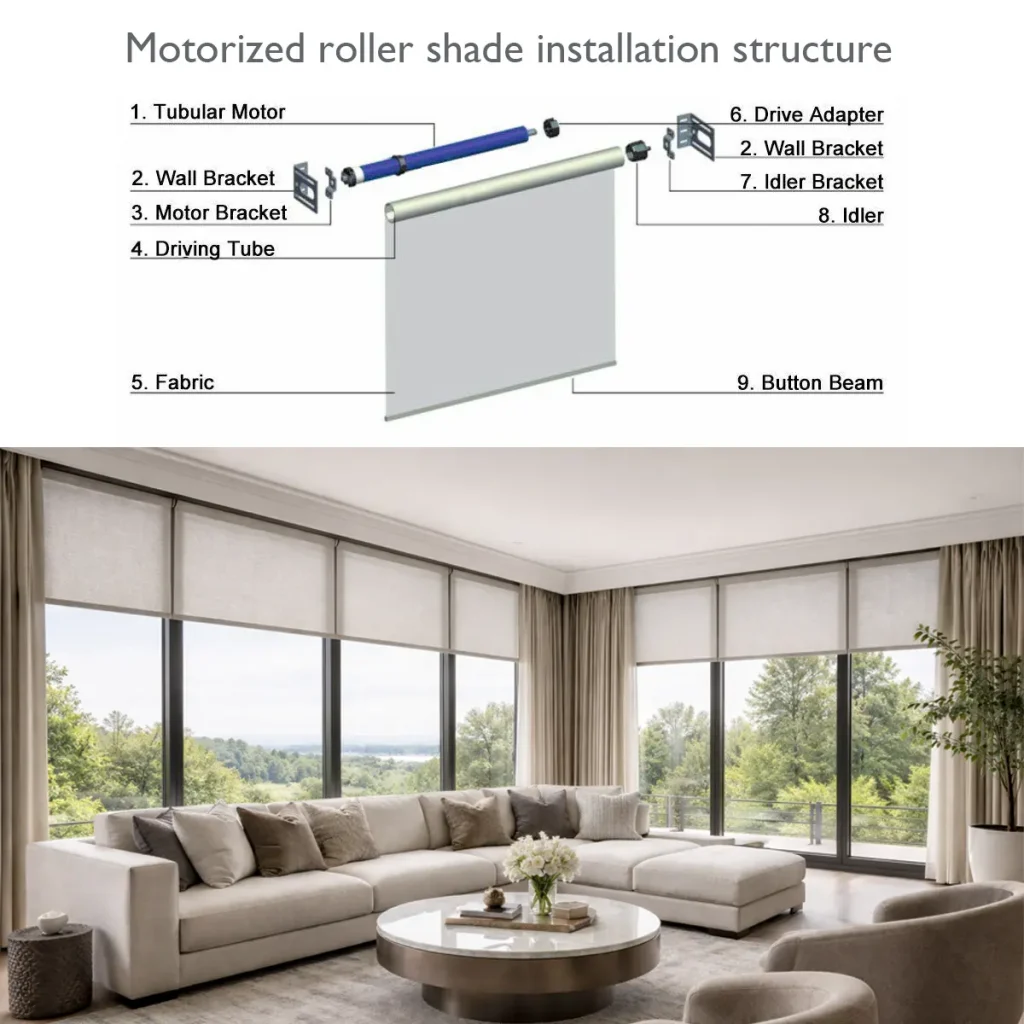
To understand the working principle in detail, visit: How Does a Tubular Motor Work?. For electromagnetic core details, read: Rotor and Stator in Tubular Motor.
Main Types of Tubular Motors
Tubular motors can be selected by power supply, limit system, control method and application. The best choice depends on the final product design and market requirement.
AC Motors
AC models are commonly used for roller shutters, awnings, large roller blinds, zip screens and heavy-duty shading systems. They are suitable for stable wired installations and higher torque applications.
DC, Battery and Solar Motors
DC, battery and solar drives are often used for roller blinds and retrofit smart shading systems where fixed wiring is difficult. They are suitable for residential windows, renovation projects and smart home applications.
Mechanical Limit Motors
Mechanical limit motors are simple, stable and cost-effective. They are widely used in standard roller shutters, awnings and basic shading systems.
Electronic Limit and Smart Motors
Electronic limit and smart drives can support more precise positioning, RF remote control, WiFi, Zigbee, app control or smart home integration depending on the model.
For a detailed comparison, read: Mechanical vs Electronic Limit Motor
Applications
These motors are used in many roller tube-based systems. The correct size depends on application type, tube diameter, load, torque requirement, control method and installation environment.
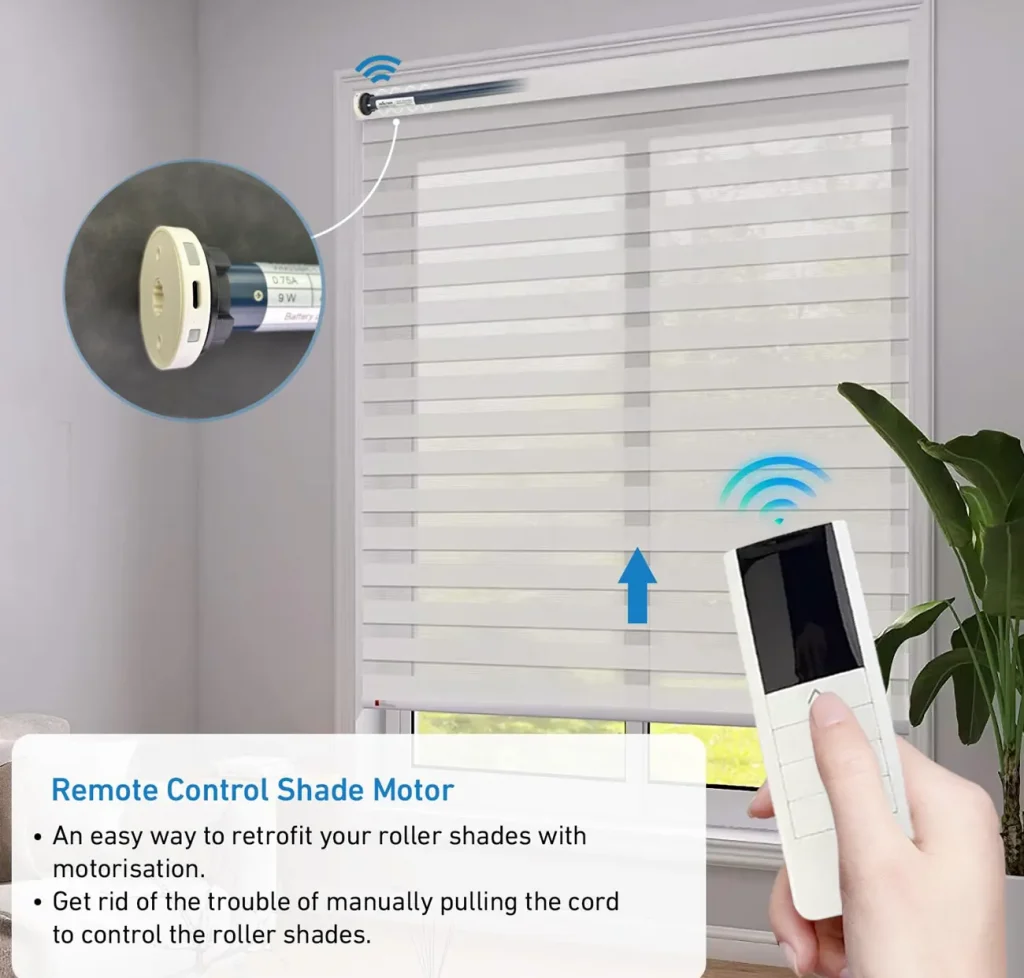
Roller Blinds
Roller blinds usually use 25mm or 35mm drives. Small indoor blinds may use low-torque 25mm models, while larger blinds or heavier fabrics may require 35mm motors.
Roller Blinds Motor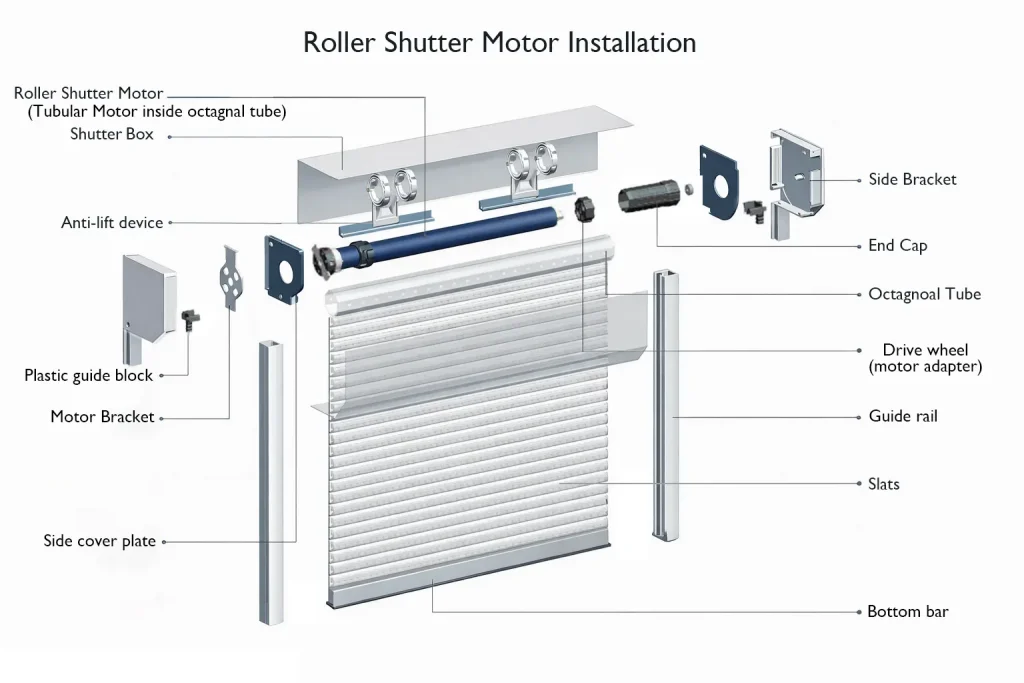
Roller Shutters
Roller shutters usually require 45mm or 59mm motors because the load is heavier than normal fabric blinds. Torque selection must consider shutter material, width, height and tube size.
Roller Shutter Motor
Awnings and Outdoor Shading
Awnings usually need higher torque because the drive must handle fabric tension, arm structure, projection size and outdoor conditions.
Awning MotorFor more application examples, visit: Tubular Motor Applications
How to Choose the Right Motor: 7 Key Tips
For OEM customers and project buyers, the best choice is not always the highest-torque product. It is the drive that correctly matches the application, tube, load, control method and long-term use conditions.
1. Confirm the Application
Different applications require different motor sizes and torque ranges. Roller blinds usually use 25mm or 35mm models, while roller shutters, awnings and heavy-duty systems usually require 45mm or 59mm motors.
2. Calculate the Required Torque
Torque must match the weight, width, tube diameter and operating load. An undersized drive may overheat, move unstably or reduce system lifetime.
3. Match the Tube Diameter
The motor, crown, drive wheel, bracket and tube profile must match correctly. Poor accessory fit can cause noise, vibration, unstable operation or installation failure.
4. Choose the Right Power Supply
AC motors are suitable for stable wired installations and higher torque applications. DC, battery and solar motors are suitable for retrofit blinds and smart window covering projects.
5. Select the Limit System
Mechanical limit motors are simple and cost-effective. Electronic limit models can provide more precise positioning and may support advanced functions depending on the configuration.
6. Confirm the Control Method
The drive can be controlled by wall switch, remote control, external receiver, built-in receiver, WiFi, Zigbee or smart home systems depending on product configuration.
7. Review Production Evidence
Quality depends on process control, winding consistency, gearbox durability, brake performance, limit switch reliability, aging tests, final inspection and after-sales support.
Reviewer and Manufacturing Context
Walter Motor reviews this guide against the motor platforms and production controls used by Zhejiang Walter Mech Electrical Co., Ltd. Manufacturing context matters because winding, gearbox, brake, limit-system and final-inspection consistency affect whether a selected motor performs as expected. This reviewer note does not replace the exact datasheet, project calculation or sample approval. For the complete process, equipment, testing and traceability evidence, view the tubular motor factory.

Procurement and engineering context
Standards and Engineering Context for OEM Buyers
GB/T 29774-2013 is the current Chinese national standard for electrical tubular drives for rolling shutters and similar equipment. A formal revision project, 20252891-T-607, is in progress, with Zhejiang Walter Mech Electrical Co., Ltd. listed among the drafting organizations.
View the latest verified national-standard status →
For a buyer, standards context is one input to an engineering review. It does not replace the exact motor datasheet, application calculation, target-market documents, installation instructions or sample validation.
Continue to Series and Model Comparison
This guide explains selection logic across 25 mm, 35 mm, 45 mm and 59 mm platforms. The product-family hub organizes Walter motor series and model pages by diameter, torque, power, limit system, control method and application. Move to the hub after defining the application, tube, load, voltage and control requirements, then confirm the final configuration with model-specific documents and sample testing.
Compliance Documents, Patents and OEM Support
For international buyers, certifications, product documentation, stable quality and OEM support are important parts of supplier selection. Walter Motor supports customers with product selection, sample confirmation, documentation, packaging, export project communication and customized production requirements.
Compliance and test documents
- Product / market compliance documents: CE-related and RoHS documentation, plus SAA where applicable.
- Independent test documentation: TÜV-issued documents for the exact tested models where applicable.
- Management-system documentation: relevant ISO management-system documentation.
Buyers should confirm document applicability by exact product series, model and destination market.
View CertificatesPatents and Innovation
Patents help demonstrate product development capability and long-term technical experience in motor and shading system solutions.
View PatentsCompany Honors
Company honors and public qualifications help B2B customers evaluate manufacturer reliability, compliance and long-term stability.
View HonorsOEM / ODM Customization
OEM customization can include torque, speed, voltage, cable length, plug type, control system, label, packaging and accessories.
Customization SupportNeed Help Selecting a Tubular Motor?
Tell us your application, tube diameter, load, torque requirement, voltage, control method and target market. Walter Motor can help compare suitable motor series, confirm accessories and prepare samples for OEM or project evaluation.
FAQ
What is a tubular motor used for?
A tubular motor is used to automate roller blinds, roller shutters, awnings, zip screens, projection screens and other roller tube-based shading systems.
How do I choose the right tubular motor?
You should consider the application type, required torque, tube diameter, voltage, limit system, control method, installation environment and expected lifetime. Roller blinds usually use 25mm or 35mm motors, while roller shutters and awnings often require 45mm or 59mm motors.
What torque do I need for roller blinds?
Small roller blinds may use 0.8–1.5 N·m motors, while larger roller blinds usually require 3–10 N·m depending on fabric weight, blind width, tube diameter and installation condition.
What motor is suitable for roller shutters?
Roller shutters usually require 45mm or 59mm motors. The required torque may range from 10 N·m to over 100 N·m depending on shutter size, material, weight, tube diameter and installation conditions.
What is the difference between mechanical limit and electronic limit motors?
Mechanical limit motors use mechanical adjustment to set upper and lower stop positions. Electronic limit motors use electronic position control and may support more advanced control features depending on the model.
Can these motors be customized for OEM projects?
Yes. OEM customization can include torque, speed, voltage, cable length, plug type, control system, label, packaging, accessories and private brand requirements.
Tubular Motor Technical Guides
Use these technical pages to check selection, structure, limit systems, troubleshooting, control options and typical torque ranges before confirming a motor series.

